
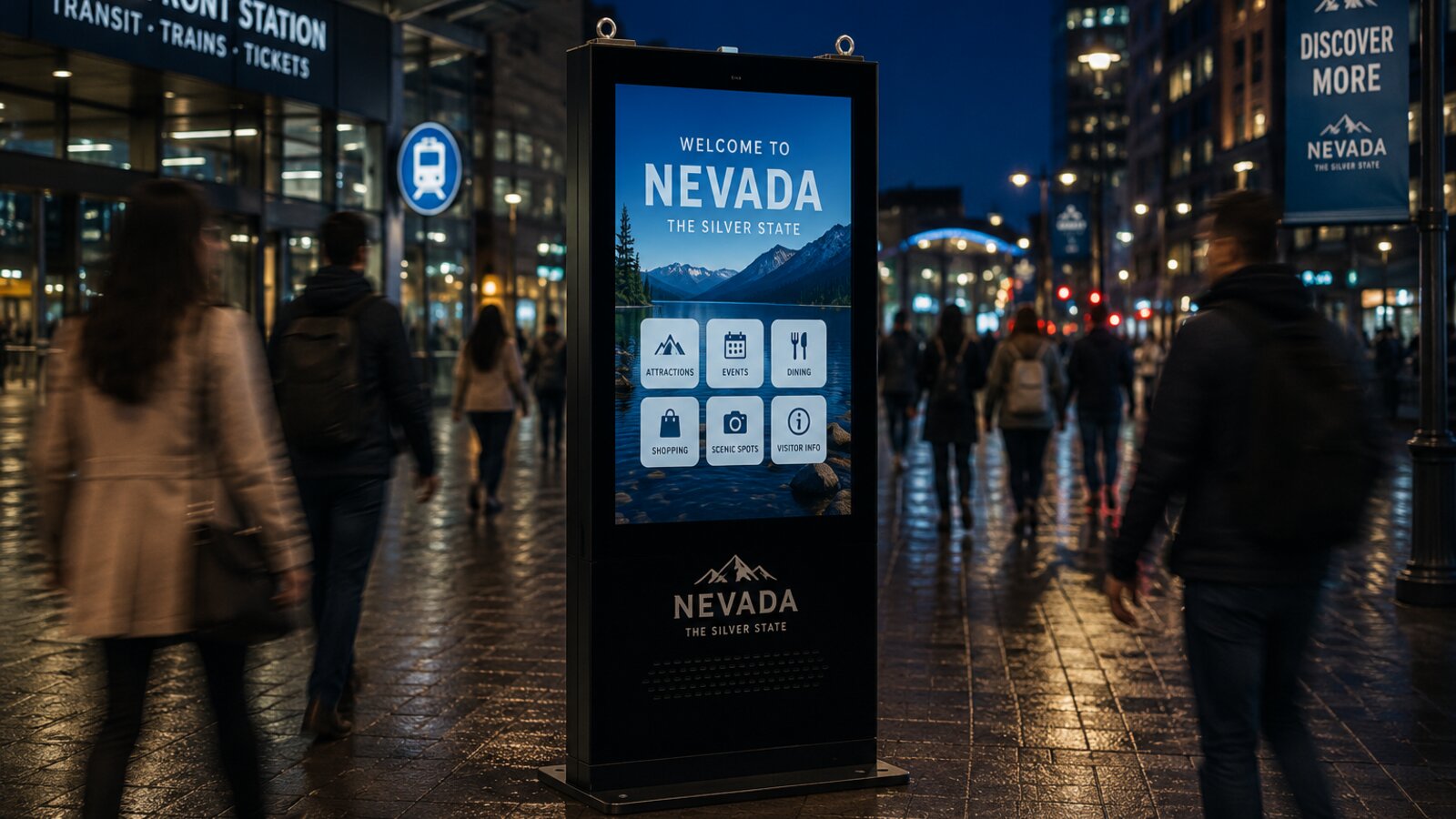
Interactive kiosks live in an awkward budget category. They are part technology, part marketing, part visitor infrastructure, and most organizations have no line item that says "kiosk." The good news is that the money exists in more places than most teams look. Here are twelve funding ideas that real destination organizations, municipalities, main streets, museums, and visitor centers use to pay for kiosks in 2026, from grant programs to revenue models that make the kiosk pay for itself.
1. State tourism and destination development grants
The most direct route. State tourism offices increasingly fund visitor infrastructure, not just advertising: Tennessee awards up to $100,000 for tourism assets including signage, New Mexico funds tourism infrastructure up to $500,000, and North Dakota reaches $5 million for destination development. Our free Kiosk Grant Finder tracks these programs for all 50 states, filterable by your organization type.
2. Federal community and infrastructure programs
Slower but larger: the EDA funds visitor facilities tied to regional economic strategies, USDA Rural Development covers community facilities in towns under 20,000, the National Scenic Byways Program explicitly funds tourist information facilities, and the BIA Tribal Tourism Grant Program writes $200,000 to $300,000 checks. Several accept applications year round.
3. Arts, culture, and humanities money
If your kiosk serves a cultural district, museum, or historic downtown, arts funding applies. Texas cultural district grants reach $250,000 and name wayfinding as an eligible use, the NEA funds creative placemaking, and humanities councils fund interpretation projects in every state. Interactive interpretation is exactly what these programs want to see.
4. Downtown, Main Street, and BID funds
Downtown revitalization programs routinely cover streetscape and public improvements, and visitor information belongs in that scope. Mississippi awards up to $500,000 per Main Street community. And if your district has a Business Improvement District, kiosk service is a textbook use of the assessment: shared infrastructure that promotes every member business.
5. Fast foundation grants
The AARP Community Challenge funds livability projects including digital connections, REALTOR associations fund placemaking through local chapters, and corporate community programs write smaller checks in weeks rather than quarters. These are ideal pilot budgets: one kiosk, one season, one report that funds the bigger application next cycle. The full menu, with deadlines and award ranges, is in our free report The 2026 Tourism Funding Landscape.
6. Advertising revenue: the kiosk that pays for itself
Not all funding is grant funding. A kiosk in a high-traffic location gathers the most valuable audience in your market: visitors deciding what to do next. Selling placements to local businesses, or joining a managed advertising network with revenue share, turns the kiosk from a cost line into a revenue line. That is the model behind VSTR Media, the media screen network for the travel economy that runs on HootBoard kiosks across 21 US markets, and for many operators it covers most or all of the monthly cost.
7. Local sponsorships and partner programs
Simpler than an ad network: a "presented by" sponsorship from a bank, hospital, or utility that wants community visibility, or a chamber partner program where member businesses fund the kiosk that features them. A single anchor sponsor at a few hundred dollars a month often covers a subscription-priced kiosk entirely.
8. Lodging tax and tourism improvement districts
Occupancy and lodging taxes exist precisely to fund visitor services, and a visitor information kiosk is among the most defensible uses of them. If your destination has a Tourism Improvement District, kiosk service fits its assessment plan. Several states also return lodging tax to communities as grant programs, which is where ideas 1 and 8 meet.
9. Crowdfunding with a public match
Michigan matches successful Patronicity campaigns up to $50,000 for public space projects, and Vermont’s Better Places program provides a 2:1 state match for community-led placemaking. Crowdfunding also doubles as proof of community support, which strengthens every later grant application.
10. Cooperative marketing funds
State co-op programs match your marketing spend, sometimes up to $225,000 per partner. Co-op dollars rarely buy hardware directly, but they fund the campaigns and content your screens run, freeing local budget for the kiosk itself.
11. Move it from capital to operating budget
Sometimes the answer is not new money but a different budget line. A capital purchase of $20,000 or more needs approvals many organizations cannot get this year; a subscription of a few hundred dollars a month fits an existing operating budget today. The complete HootBoard AirX kiosk runs $299 per month with hardware, software, and support included, which is why so many teams fund it without a grant at all.
12. Stack a pilot into a program
The pattern behind most multi-kiosk deployments: a fast foundation grant or sponsor funds one pilot, the pilot’s engagement analytics become the evidence in a state application, and the state award becomes the local match for a federal one. Each layer de-risks the next. Our guide to funding a visitor information kiosk walks through structuring those applications, and the current grant deadlines tell you which window to aim for first.
Where to start
Pick the two or three ideas that fit your organization, then do these in order: search the Kiosk Grant Finder for programs open to your state and organization type, download The 2026 Tourism Funding Landscape for the deadline calendar and application boilerplate, and when the funding lands, use the DMO Kiosk RFP Kit to run the purchase in weeks instead of quarters. All three are free, and the Finder includes deadline alerts so the next funding window finds you instead of the other way around.