
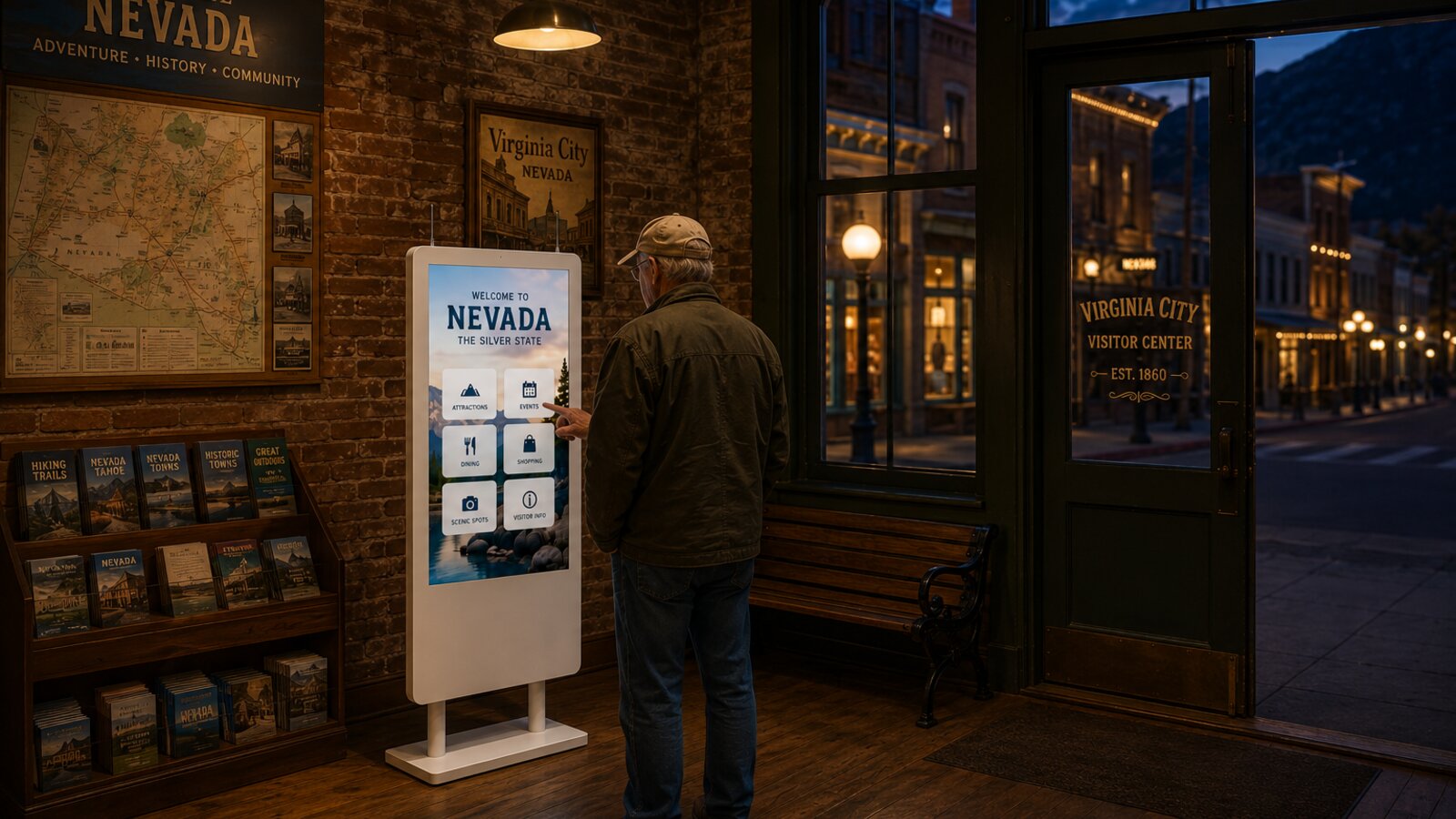
Ask a DMO director why the visitor center still runs on brochure racks and the answer is almost never about the technology. It is about the budget line. Visitor-facing technology sits in the awkward space between marketing and capital spending, and in most destination budgets neither bucket has room for it.
Here is the part that gets missed: there is real grant money for exactly this kind of project. While building our Kiosk Grant Finder, we catalogued 114 active federal, state, and foundation programs that can fund visitor centers, interactive kiosks, wayfinding, and destination technology. This guide walks through where that money lives and how to write a kiosk into a winning application.
What a kiosk project actually costs
Funders like specific numbers, so let us start there. A complete modern kiosk program can be structured two ways. As a capital purchase, interactive kiosk hardware typically runs anywhere from $6,000 to $25,000 per unit before software. As a subscription, complete packages exist for far less: the HootBoard AirX, for example, includes the hardware, software, and support for $299 per month.
That distinction matters for grant writing. A capital grant can cover an up-front purchase, while marketing and operating grants can often cover a subscription. Knowing both models lets you match the project to whichever program is open.
1. Your state tourism office
Nearly every state tourism office runs grant or cooperative marketing programs, and several fund visitor infrastructure directly. Tennessee’s Tourism Enhancement Grant awards up to $100,000 for capital investments in tourism assets, explicitly including signage. New Mexico’s Destination Forward program funds tourism infrastructure up to $500,000. Massachusetts runs an annual Destination Development Capital program, and North Dakota’s Destination Development Grant reaches up to $5 million for visitor experience infrastructure.
These are the programs most likely to name visitor experience in their guidelines, and the application usually goes through people whose job is helping destinations in your state succeed.
2. Federal programs
Federal money takes longer but goes further. Four programs stand out for visitor technology:
National Scenic Byways Program: one of the few federal programs that explicitly funds construction of tourist information facilities along designated byways.
EDA Public Works and Economic Adjustment Assistance: funds visitor centers and tourism facilities when they connect to a regional economic development strategy, with rolling applications.
USDA Rural Development Community Facilities: loans and grants for essential community facilities, including visitor centers and museums, in towns under 20,000 people.
BIA Tribal Tourism Grant Program: awards of $200,000 to $300,000 for federally recognized Tribes growing visitation to existing tourism destinations.
3. Arts and cultural district money
If your kiosk lives in a cultural district, museum, or arts corridor, a second funding world opens up. Texas awards Cultural District Project grants up to $250,000 that explicitly cover signage, wayfinding, and district promotion. The National Endowment for the Arts funds creative placemaking through its Grants for Arts Projects program. State arts councils fund interpretive and audience engagement technology; Ohio’s ArtsNEXT program even prioritizes experimental pilots.
4. Downtown and Main Street programs
Downtown revitalization grants routinely fund streetscape improvements, and visitor information fits naturally inside that scope. Mississippi’s Main Street Revitalization Program awards up to $500,000 per community. Pennsylvania’s Keystone Communities Program funds public improvements in designated Main Street districts. Virginia, Nevada, Colorado, and many other states run similar programs through their Main Street networks.
5. Foundations and corporate programs
Smaller but faster. The AARP Community Challenge funds quick-turnaround livability projects, with categories covering public places and digital connections. The REALTOR Party placemaking grants fund public gathering spaces through local REALTOR associations. These awards are modest, but they move in months rather than years and make strong pilot funding.
How to write a kiosk into a winning application
Sell outcomes, not hardware. Funders do not buy kiosks. They buy visitor dispersal, longer stays, referrals to local businesses, and emergency communication capability. Lead with those.
Promise measurement. Most applications ask how you will measure success. A kiosk platform with built-in analytics answers that section for you: searches, taps, and QR handoffs become your report to the funder.
Mind the match. Most state programs require a 1:1 match or better. In-kind contributions and volunteer hours sometimes count. Read the fine print before you scope the project.
Collect letters of support. A kiosk that promotes local businesses makes it easy to gather letters from your chamber, your merchants, and your partner attractions.
Structure ongoing costs honestly. Subscription pricing fits operating budgets, and some marketing grants prefer program costs over capital. Match the pricing model to the program.
Why the calendar matters right now
Grant cycles cluster in late summer and fall, when state fiscal years reset and DMOs plan next year’s budgets. Several major deadlines land in August and September alone. Applications take 60 to 90 days to prepare well, so the window to start is now, not when the deadline announcement hits your inbox.
Find the programs open to you
We keep all 114 programs, including award ranges, eligibility, and deadlines, in the free Kiosk Grant Finder. Filter by your state and organization type, and sign up for deadline alerts so the next cycle never slips past you.
If you want all of this in one document, the free report The 2026 Tourism Funding Landscape packs the full analysis: all 114 programs, the 12-month deadline calendar, the match decoder, and application boilerplate you can lift. And when the money lands, the DMO Kiosk RFP Kit covers the procurement side with pre-written RFP language and a vendor scoring matrix.
Grants are only one of the doors: for the wider menu, including advertising revenue, sponsorships, and lodging tax strategies, see our roundup of kiosk funding ideas for 2026.