
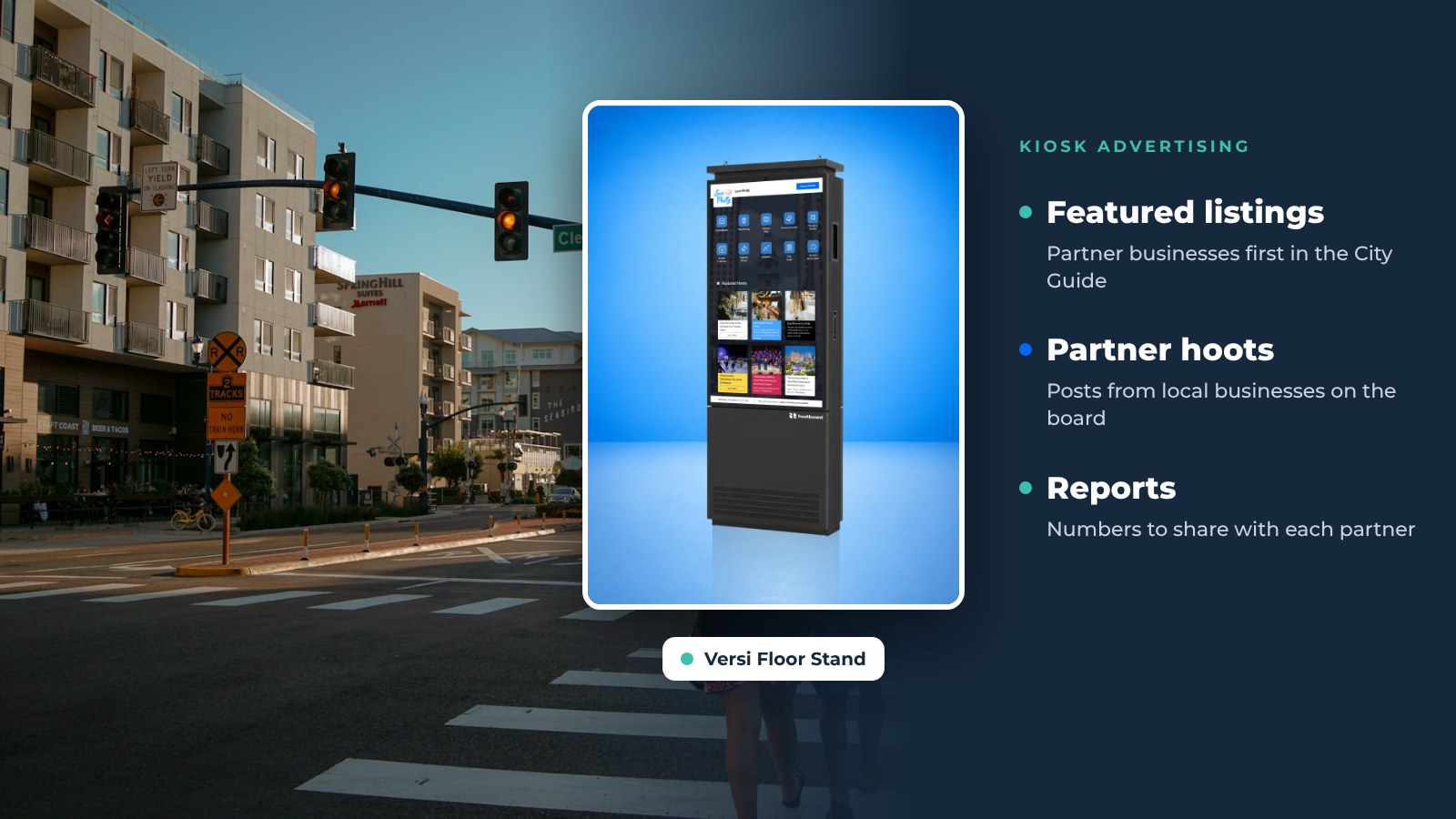
A network of visitor kiosks costs money to run. Kiosk advertising is how many destinations, cities and campuses cover that cost, and in some cases turn the network into a small kiosk media business.
There are two ways it works on an interactive kiosk:
- Sponsored listings you sell yourself. A local restaurant, shop or attraction pays to be featured in the city guide, the directory or the board visitors browse.
- Screen ads through a partner. Short ads in the idle-screen playlist, sold and placed by a screen advertising partner so your team does not have to.
This post covers how to set up a kiosk advertising program, where the demand is, how HootBoard supports it, and a note for media operators who run kiosk networks on behalf of DMOs and cities.
Seven steps to a kiosk advertising program
Start small and grow what sells. These seven steps take you from an idea to a program that local businesses renew.
- Know your locations. List where the kiosks are or will be, and roughly how many people pass each one. A welcome center, a transit hub and a downtown corner are three different audiences.
- Decide what you will sell. Featured listings in the City Guide, sponsored hoots on the board and idle-screen ad slots. Keep the first menu short.
- Set the rules. What counts as a sponsor, how listings are labeled, how long they run, who approves the content. Visitors trust the kiosk because it speaks for the destination. Protect that.
- Pick the platform. The software should make a sponsored listing a setting, not a design project. It should also report on it per screen.
- Start with partners you know. The restaurants and attractions already in your visitor guide are your first advertisers. Offer one season at a time.
- Put the kiosks where people stop. Entrances, waiting areas, transit stops, trailheads. An ad on a screen nobody touches is just a poster.
- Report back. Show each advertiser how many visitors opened their listing, asked for directions or scanned the QR code. Renewals come from numbers.

Where the demand is
Local businesses already pay to reach visitors. They buy brochure racks, visitor guide ads and social posts. A kiosk puts them in front of a visitor who is in town right now, deciding where to go next.
- Visitor centers and welcome centers. The first stop for travelers who have not picked a restaurant or a tour yet. An interactive tourism kiosk here is where most destinations start.
- Transit hubs and airports. Lots of people, short waits, and a steady question: what is near here?
- Downtown and event venues. Festival-goers and conference attendees looking for dinner within walking distance.
- Campuses. Students, and parents on tour days. Local businesses want to reach both.
The City Guide matters here. When a visitor browses for coffee or dinner, featured listings show first in the list. That is the most natural ad a kiosk can show. It helps the visitor and it helps the business.
How HootBoard supports kiosk advertising
HootBoard is a kiosk operating system and content platform. Its advertising tools are the same tools you use for the rest of your content, so there is nothing extra to learn.
- Featured partner businesses in the City Guide. Mark a listing as featured and it shows first in the list, with its own detail page and QR directions.
- Sponsored hoots. A post on the board from a partner, scheduled and approved by your team in one click.
- Screen Playlists. Idle-screen signage where short partner videos and images play between visitor sessions, on the kiosk and on signage screens around town.
- One dashboard. Every screen, listing and playlist in one place. Publish to the whole network or to one location.
- Content without a designer. Flyer templates and an AI posting helper, so a partner's listing looks right in minutes.

Prove it to advertisers
A sponsor renews when they see numbers they believe. HootBoard analytics report per screen: how many visitors, where they came from, how long they stayed, what they searched for, which hoots and apps they opened, and how many QR codes they scanned. Those numbers become each advertiser's monthly report. See HootBoard plans.

AdSpace: screen ads through a partner
Selling idle-screen ads to bigger brands is a different job from selling featured listings to the café down the street. Most destinations do not want to staff it.
AdSpace is an optional screen advertising service run by an independent partner company. It is integrated with HootBoard and co-marketed with us. It fills ad slots in your idle-screen playlists, so your team does not have to find and manage those advertisers.
AdSpace is not a HootBoard product, and you do not need it. Many networks run on sponsored listings alone. If you want to see how it would fit your network, ask during a demo.
If you operate kiosk networks for others
Some media operators install and run visitor kiosks for DMOs, cities or property owners, and fund them through advertising. The same tools apply. Settle a few things first:
- Who owns the content. The destination's voice should stay the destination's. Agree on what the operator can sell and what stays editorial.
- Who sees the data. Both sides need the analytics. Decide who reports to whom.
- Where the screens go. The destination knows where visitors stop. The operator knows what advertisers will pay for. Choose together.
With one dashboard for every screen, both teams work from the same place, across any number of locations.
Start with the partners you have
Kiosk advertising works best when it is useful to the visitor first. Featured listings that help someone find dinner, and idle-screen ads that do not get in the way of the map, keep the kiosk trusted and keep the program funded. Start with the partners you already have, report honestly, and add AdSpace when you are ready to sell beyond the neighborhood.
If you are planning a kiosk network and want it to pay for itself, book a demo.
FAQ
What is kiosk advertising?
Paid placement on interactive kiosks: featured listings for local businesses in a city guide or directory, sponsored posts on the board, and short ads in the idle-screen playlist.
How does a kiosk media network make money?
Two ways. The operator or destination sells sponsored listings directly to local businesses, and a screen advertising partner such as AdSpace fills idle-screen ad slots.
Does HootBoard sell the ads for me?
HootBoard gives you the tools to run sponsored listings and hoots yourself. For idle-screen ads, AdSpace is an optional service from an independent partner company that HootBoard co-markets.
How do I show advertisers the results?
HootBoard reports per screen on visitors, where they come from, dwell time, searches, which listings were opened and QR scans. Those numbers make up the advertiser's report.
Can I run kiosk advertising on screens I already own?
Yes. HootBoard runs on its own kiosks, on Android 7+ screens through the HootBoard app, and on x86 PCs by booting HootBoard Kiosk OS from USB.