
Destination branding is how a place stops competing on scenery and starts competing on identity. Here is the definition, a classic example, and the practices that make it work.
Definition of Destination Branding
Destination branding, or place branding, is the process of identifying, crafting and nurturing the unique identity of a place so it stands apart from its competitors. It covers visual elements like logos and symbols, and the emotional experience a destination offers.
A good brand starts with a place's strongest assets: the things prospective visitors find more appealing there than anywhere else they could go.
In short, branding a destination is the strategic work of showing what makes a place different and saying it clearly. Good branding depends on sharing the brand's values so the destination stays in a traveler's mind.
Example of Successful Destination Branding
A well-known example is New Zealand's "100% Pure New Zealand" campaign. Launched in 1999, it positioned the country as a pure, untouched and refreshing place to visit. By focusing on pristine landscapes and an adventurous spirit, New Zealand reached a global audience and strengthened its tourism industry.
Destination Marketing Branding Ideas
Good branding starts with what is already true about your place. These ideas work for a small town, a city or a whole region.

- Local culture: create memorable events that show what makes your place different.
- Core appeal: find what is unique about your destination and use it in all your materials.
- Residents as ambassadors: build relationships with locals so they tell the same story.
- Leadership voice: share insights and success stories from your team on social media.
- Creators and partners: work with creators whose values match yours, and with local businesses on exclusive deals.
- Feedback loops: ask visitors what they need and improve what you offer.
- Technology: use mobile and on-site tools that make it easy to explore, from trip guides to interactive screens.
- Sustainability: show your eco-friendly efforts to responsible travelers.
- One story: keep your brand message the same across every channel.
Best Practices in Destination Branding
Destination brands that last tend to follow the same few habits.
- Identify unique selling points (USPs): find what makes your destination special, such as heritage, nature or food.
- Engage the community: the brand must reflect the real spirit of the place, so involve locals.
- Keep messaging consistent: the same voice across all platforms keeps the brand recognizable.
- Use digital platforms: share stories and images on social media, your website and digital marketing.
- Monitor and adapt: branding is not a one-time effort. Track results and adjust.
How Destinations Can Use Branding to Drive Tourism
A brand only matters if it brings people in and sends them around town. Here is how destinations turn it into visits.

- Create emotional connections: use storytelling and images that make people dream of visiting.
- Target the right audience: speak to the travelers most likely to love what you offer.
- Collaborate with influencers: partner with creators who can share real experiences.
- Offer unique experiences: highlight what visitors can only do here.
- Focus on sustainability: many travelers look for responsible options.
When a destination keeps finding what makes it unique, involves its community, keeps its message consistent and uses digital tools, it builds a brand that attracts visitors and supports the local economy.
Interactive Digital Signage in Destination Branding
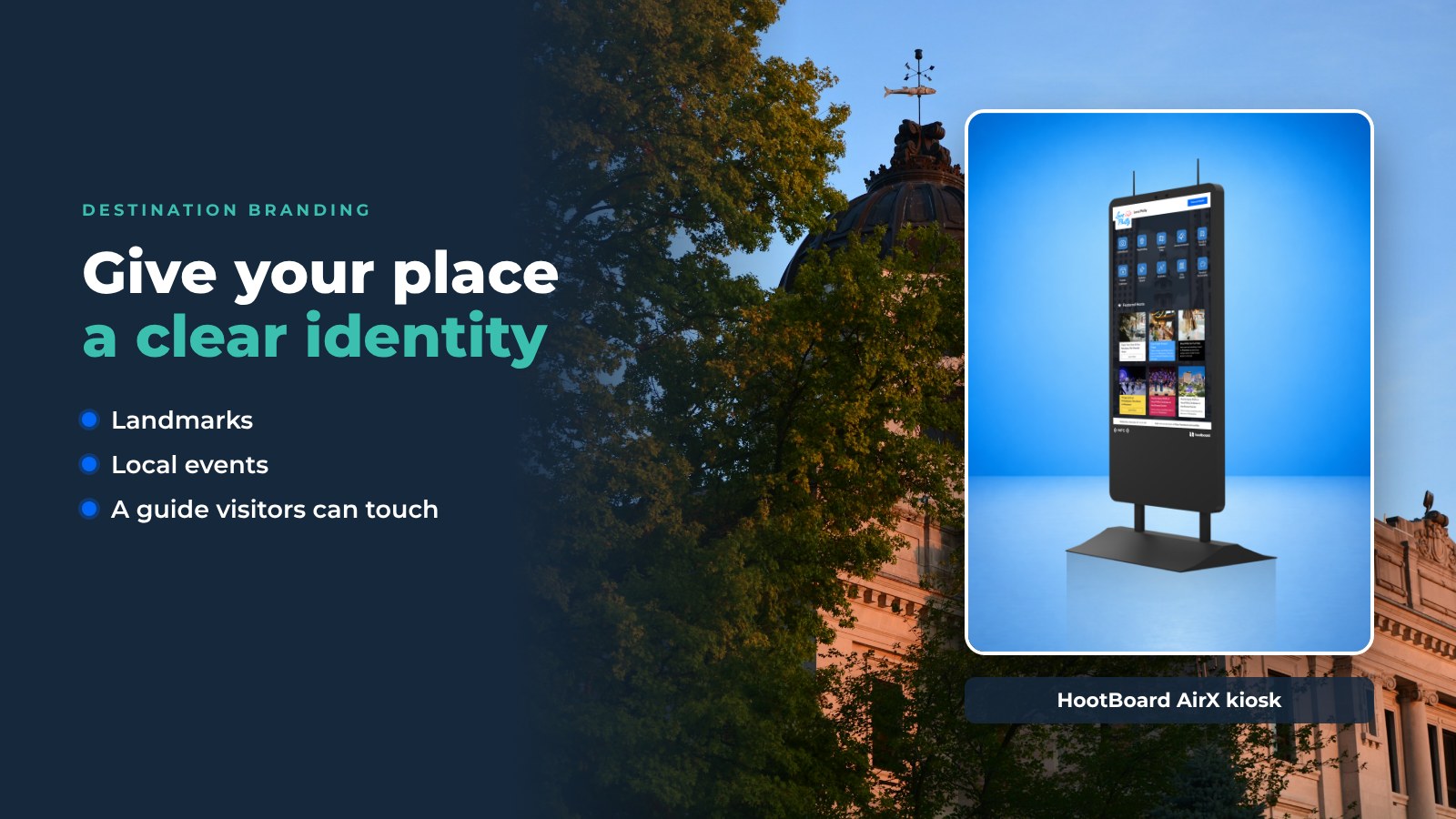
Your brand does not stop at your website. Visitors judge it when they arrive. Interactive screens in welcome centers, hotels and downtown let you tell the brand story in person, and let visitors take it with them on their phones.

- Maps and guides: City Guide shows places on a map and in a list, with detail pages and QR directions to a visitor's phone. Featured listings show first, so your local partners get noticed.
- Itineraries and neighborhoods: guide visitors through the parts of town you want to feature.
- Events: keep the screen current with what is on this week from your calendars and feeds.
- Visitor feedback: forms and surveys capture what visitors think, and analytics show what they search for.
- Photo moments: the Selfie app invites visitors to share your destination.
See How HootBoard Can Help Your Destination Brand Marketing
HootBoard is a kiosk operating system and content platform, plus the touchscreen kiosks that run it. You publish once, and it shows on kiosks, signage screens and visitors' phones, so your brand looks the same everywhere.
- Live in under 30 minutes, with no IT team needed.
- Your staff update content from a simple web dashboard.
- Analytics show who visits and what they look for.
- City Guide supports multiple languages for international visitors.
Want to see how your places and events would look on a kiosk? Book a demo and we will walk you through it.
FAQ
What is destination branding?
It is the process of defining a place's unique identity and sharing it so travelers choose it over competitors.
What are examples of destination branding?
New Zealand's "100% Pure New Zealand" campaign is a well-known example.
How do you build a destination brand?
Find your unique selling points, involve the community, keep your message consistent, use digital channels and measure results.
How can kiosks help a destination brand?
They carry your brand story to visitors in person with maps, events and guides. See our interactive tourism kiosks.