Interactive Wayfinding Kiosks for Museums: Helping Visitors Explore Without Getting Lost
Museums are designed to inspire curiosity, discovery, and learning — yet many visitors spend a surprising amount of time feeling confused, disoriented, or unsure where to go next. Large floor plans, multiple exhibitions, temporary galleries, and unfamiliar layouts often make navigation one of the biggest friction points in the museum visitor experience.
This is where interactive wayfinding kiosks for museums play a critical role.
Modern museums are increasingly adopting visitor engagement kiosks, interactive wayfinding solutions, and digital visitor management tools to help guests navigate confidently, reduce staff interruptions, and improve overall visitor satisfaction. Platforms like HootBoard enable museums to deploy flexible, content-driven wayfinding kiosks that are easy to update, visually engaging, and accessible to all visitors.
In this guide, we’ll explore how interactive wayfinding kiosks work in museums, the problems they solve, and how museums can use HootBoard to create intuitive navigation experiences without complex infrastructure.
What Is an Interactive Wayfinding Kiosk in a Museum?
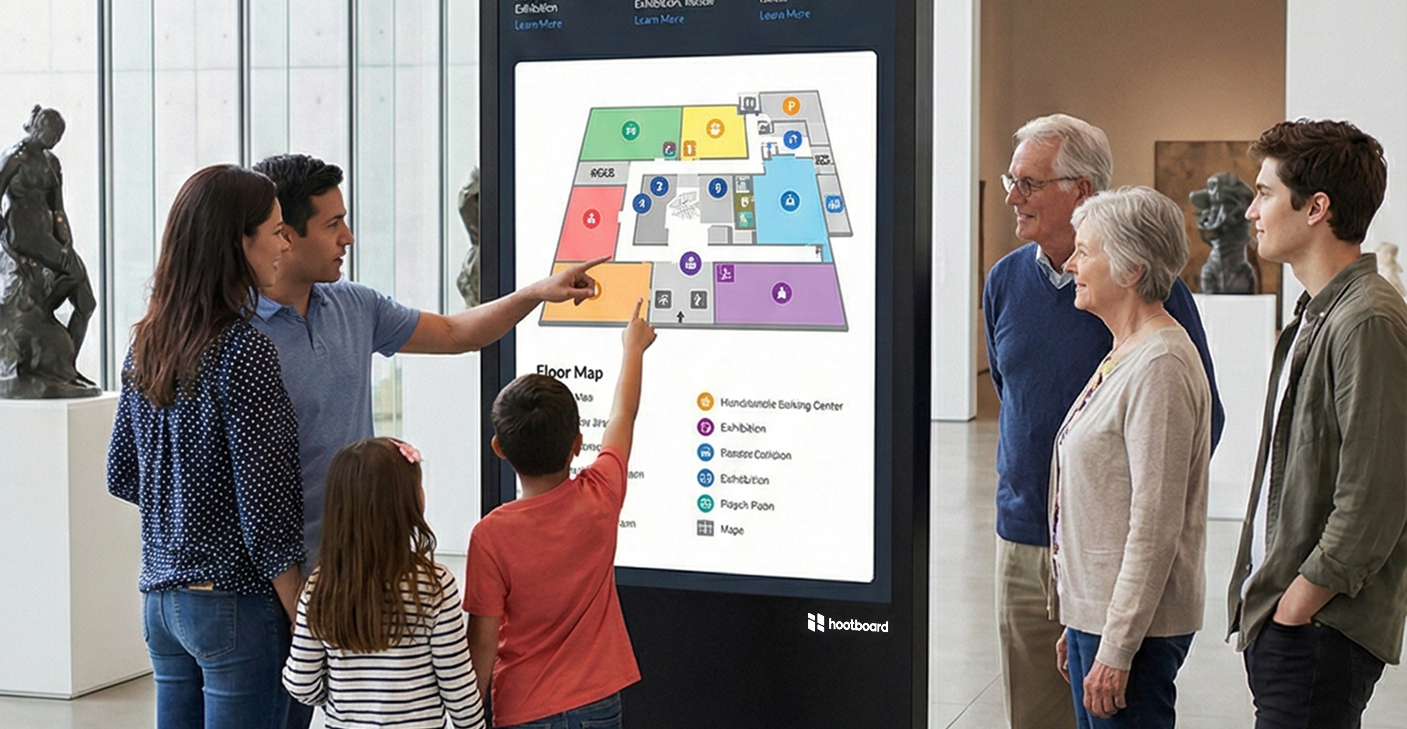
An interactive wayfinding kiosk is a touchscreen digital display placed at key locations within a museum that helps visitors understand where they are, what exhibitions are available, and how to reach them.
Unlike static maps or printed directories, interactive wayfinding kiosks allow visitors to:
-
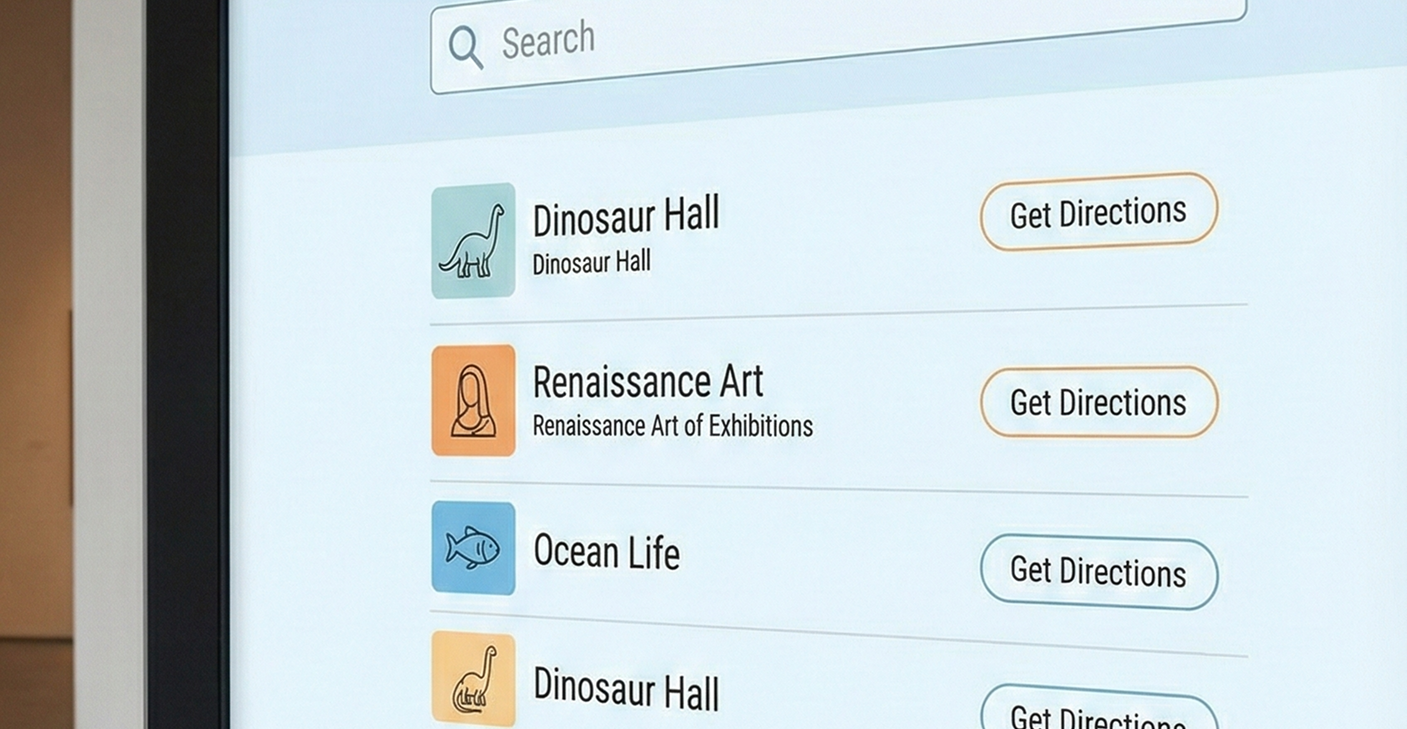
Search exhibitions, galleries, or amenities
-
View floor-by-floor navigation
-
Get step-by-step directions
-
Discover nearby points of interest
-
Access information in multiple languages
When powered by a platform like HootBoard, wayfinding kiosks become dynamic visitor engagement tools — not just maps.
Learn more about interactive kiosk platforms →
Why Museums Need Interactive Wayfinding Kiosks
Museums face unique navigation challenges that traditional signage often fails to solve.
Complex Layouts and Large Spaces
Museums frequently span multiple floors, wings, and exhibition halls. Visitors can quickly feel overwhelmed, especially in large national museums or cultural centers.
Interactive wayfinding kiosks simplify this complexity by providing visual, searchable navigation that adapts to the visitor’s needs.
Rotating Exhibitions and Temporary Galleries
Printed maps become outdated as exhibitions change. With digital wayfinding kiosks, museums can update directions and listings instantly — without reprinting materials.
Reducing Staff Interruptions
Front desk and gallery staff are often interrupted with directional questions. Wayfinding kiosks reduce this load, allowing staff to focus on education and engagement.
How Interactive Wayfinding Kiosks Improve Museum Visitor Engagement
Wayfinding is not just about directions — it directly impacts how visitors experience the museum.
Encouraging Exploration
Interactive kiosks highlight exhibitions visitors may not have planned to see, increasing dwell time and exploration.
Inclusive and Accessible Navigation
Wayfinding kiosks can support:
-
Multiple languages
-
Clear icons and large text
-
Accessibility-friendly placement
This ensures a better experience for international visitors, families, and elderly guests.
Reducing Visitor Anxiety
Knowing where to go next reduces frustration and cognitive overload, allowing visitors to focus on learning and enjoyment.
Explore visitor experience solutions →
Visitor Engagement Kiosks vs Traditional Museum Signage
Traditional signage is static and limited. Visitor engagement kiosks provide museums with flexibility and insight.
|
Traditional Signage |
Interactive Wayfinding Kiosk |
|---|---|
|
Fixed content |
Real-time updates |
|
Limited languages |
Multi-language support |
|
One-size-fits-all |
Personalized exploration |
|
No analytics |
Usage insights |
With HootBoard, museums can control kiosk content centrally and adjust navigation flows based on visitor behavior.
Using HootBoard for Interactive Wayfinding in Museums
HootBoard enables museums to create interactive wayfinding kiosks without custom software development.
Museums use HootBoard to:
-
Display interactive maps and directories
-
Highlight current and upcoming exhibitions
-
Guide visitors to amenities (restrooms, cafes, exits)
-
Update content instantly from a central dashboard
Because HootBoard is content-driven, museum teams can manage wayfinding experiences without technical expertise.
Learn about digital signage for public spaces →
Interactive Wayfinding Kiosks for Different Types of Museums
Art Museums
-
Guide visitors through curated exhibition paths
-
Highlight featured artworks or collections
Science and Discovery Centers
-
Direct visitors to age-appropriate exhibits
-
Support interactive learning journeys
History and Cultural Museums
-
Provide contextual navigation tied to themes or eras
-
Reduce confusion in large, multi-wing buildings
Free Wayfinding and Visitor Engagement Kiosk Software – What Museums Should Know
Many museums explore free visitor engagement kiosk software when starting their digital journey.
HootBoard allows museums to:
-
Pilot interactive wayfinding kiosks
-
Start with basic maps and directories
-
Expand into richer engagement experiences over time
This makes it easier for museums to experiment without heavy upfront investment.
How Museums Can Get Started with Interactive Wayfinding Kiosks
Launching interactive wayfinding kiosks in museums follows a simple process:
1.dentify high-traffic decision points (entrances, elevators, junctions)
2.Choose touchscreen or large-format displays
3.Design clear, intuitive navigation content
4.Deploy and refine based on visitor feedback
With HootBoard, updates can be made instantly — even during live exhibitions.
Frequently Asked Questions
What is an interactive wayfinding kiosk in a museum?
An interactive wayfinding kiosk is a digital touchscreen that helps museum visitors navigate exhibitions, galleries, and amenities easily.
Do wayfinding kiosks replace museum staff?
No. They reduce repetitive directional questions, allowing staff to focus on education and engagement.
Are interactive wayfinding kiosks suitable for small museums?
Yes. Even small museums benefit from clearer navigation and reduced visitor confusion.
Can wayfinding kiosks support multiple languages?
Yes. Digital kiosks can easily support multilingual content.
The Future of Wayfinding in Museums
As museums continue to evolve into interactive, visitor-centric spaces, interactive wayfinding kiosks will become essential infrastructure.
By combining navigation, engagement, and real-time content updates, platforms like HootBoard help museums guide visitors confidently — ensuring every guest spends less time lost and more time discovering.