Universities generate massive volumes of data every day—from learning management systems and campus apps to interactive kiosks and digital signage. Yet, much of this data remains fragmented, underutilized, or analyzed too late to make a meaningful impact. For university IT teams, student affairs leaders, and campus data analysts, this represents a missed opportunity.
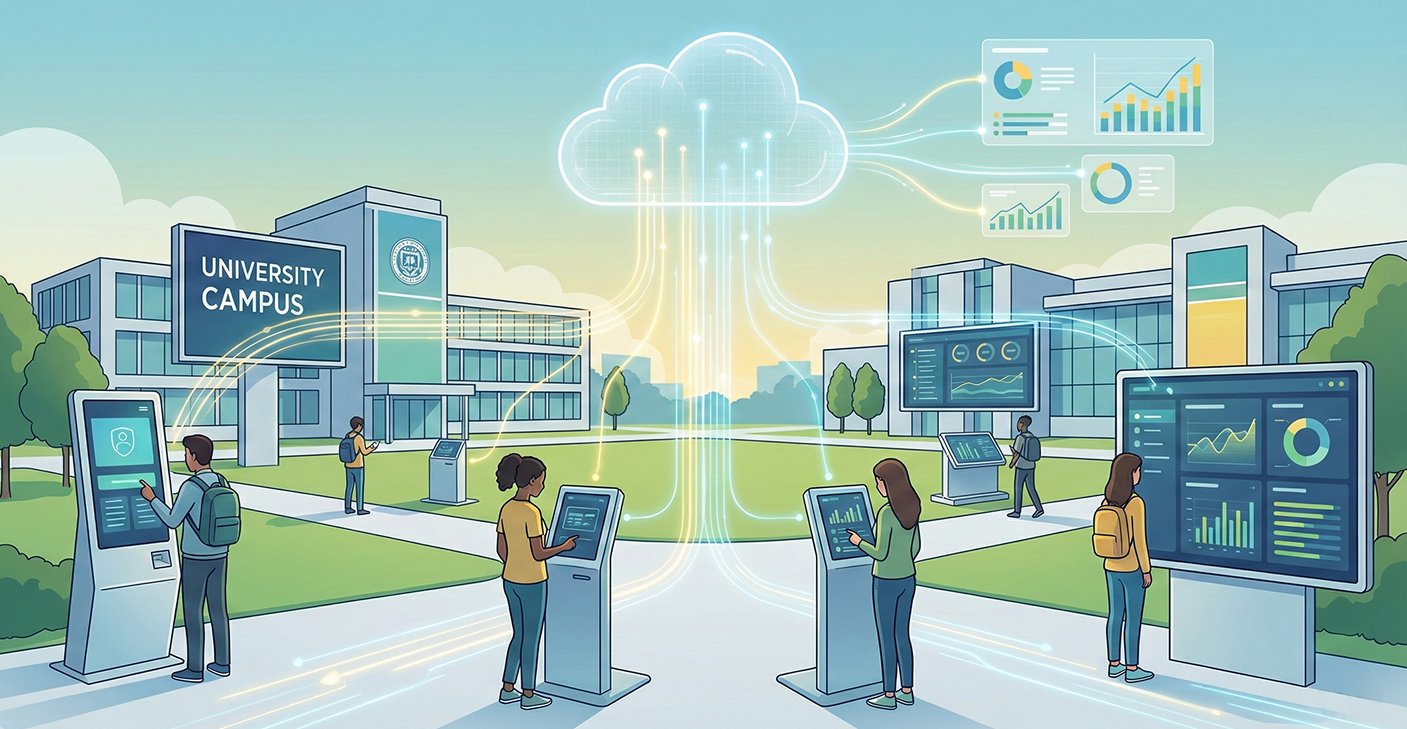
Student-facing digital systems—especially visitor management kiosks, campus engagement kiosks, and interactive wayfinding kiosks—are no longer just information tools. They are rich data sources that reveal how students navigate campus, what services they seek, and where friction exists in the student experience.
This article explores how universities can unlock the hidden power of campus data, transform student insights into action, and build smarter, more responsive campus services using modern digital infrastructure.
Why Campus Engagement Data Matters More Than Ever
Higher education is under increasing pressure to improve student satisfaction, retention, and operational efficiency—often with limited budgets and staff. Traditional feedback mechanisms like annual surveys and focus groups provide valuable context, but they are retrospective and slow.
In contrast, engagement data from campus kiosks and digital systems offers:
- Real-time visibility into student behavior
- Objective insights based on actions, not opinions
- Continuous feedback loops instead of one-time snapshots
Universities that harness this data gain the ability to identify problems early, test solutions quickly, and continuously improve student services.
Campus Digital Signage Solutions →
What Types of Student Insights Can Universities Collect?
Modern campus digital systems generate valuable, privacy-conscious data that can be aggregated and analyzed without identifying individuals.
Interaction Data from Campus Kiosks
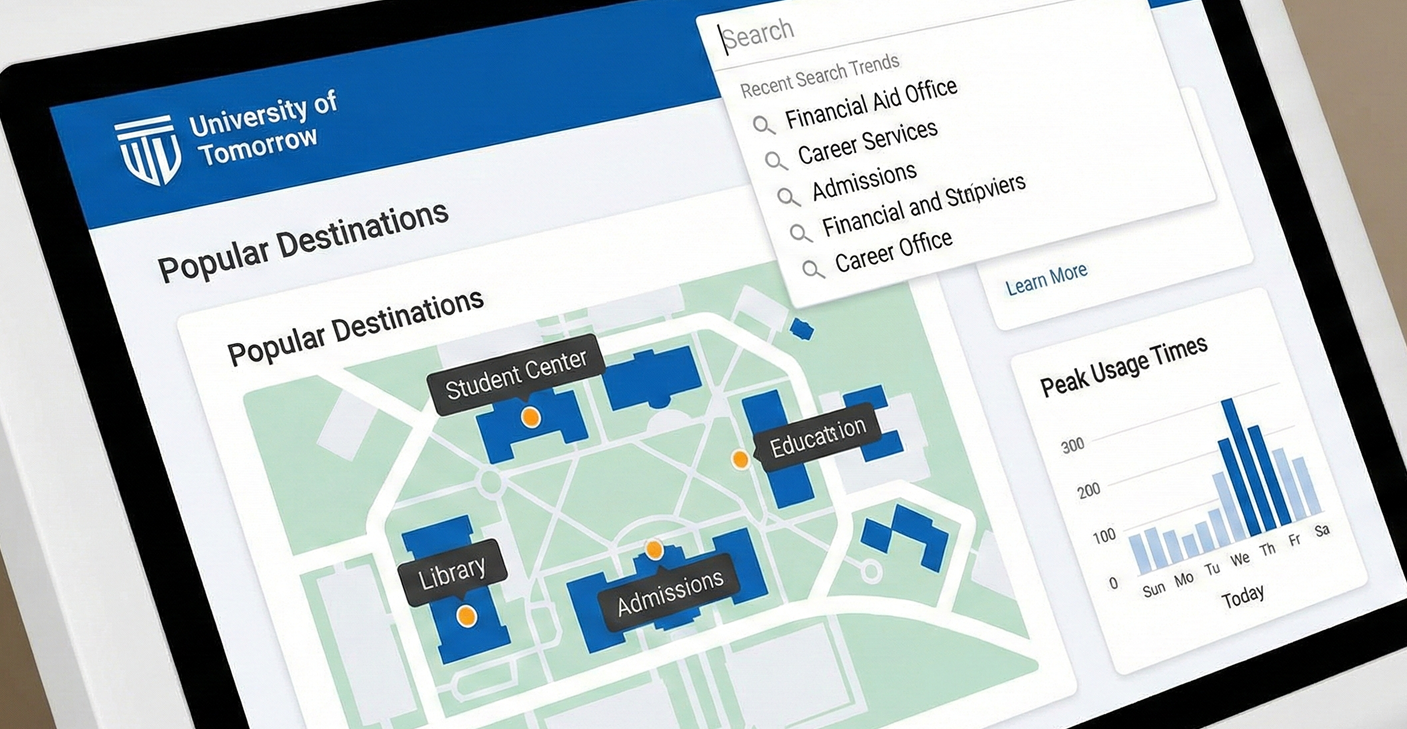
Interactive kiosks placed in libraries, student centers, academic buildings, and residence halls collect insights such as:
- Most searched services and locations
- Peak usage times by hour, day, and semester
- Navigation drop-offs and repeat searches
- Language preferences and accessibility usage
- Differences between first-year and senior behavior
This data reveals where students feel lost, overwhelmed, or underserved—especially during orientation and peak academic periods.
Interactive Wayfinding Kiosk for Universities page →
Engagement Data from Digital Signage and Campus Content Systems
Digital signage and campus content platforms track:
- Content impressions and engagement rates
- Event views versus actual attendance
- Category performance (academic, career, wellness, clubs)
- Seasonal engagement patterns
When analyzed together, these insights help universities understand what students care about—and when.
Digital Signage for Universities page →
How Student Affairs Teams Can Use Data to Improve Campus Services
Student affairs departments oversee housing, wellness, activities, and student support—areas where timely insights make a direct difference.
Identifying Service Bottlenecks Before They Escalate
Repeated searches for the same office, frequent navigation errors, or sudden spikes in kiosk usage often indicate confusion or unmet demand.
With real-time data, student affairs teams can:
- Adjust staffing during peak periods
- Improve signage and service visibility
- Simplify service flows and instructions
Instead of reacting to complaints, teams act proactively.
Designing Student-Centered Experiences Based on Behavior
Behavioral data often contradicts assumptions. For example:
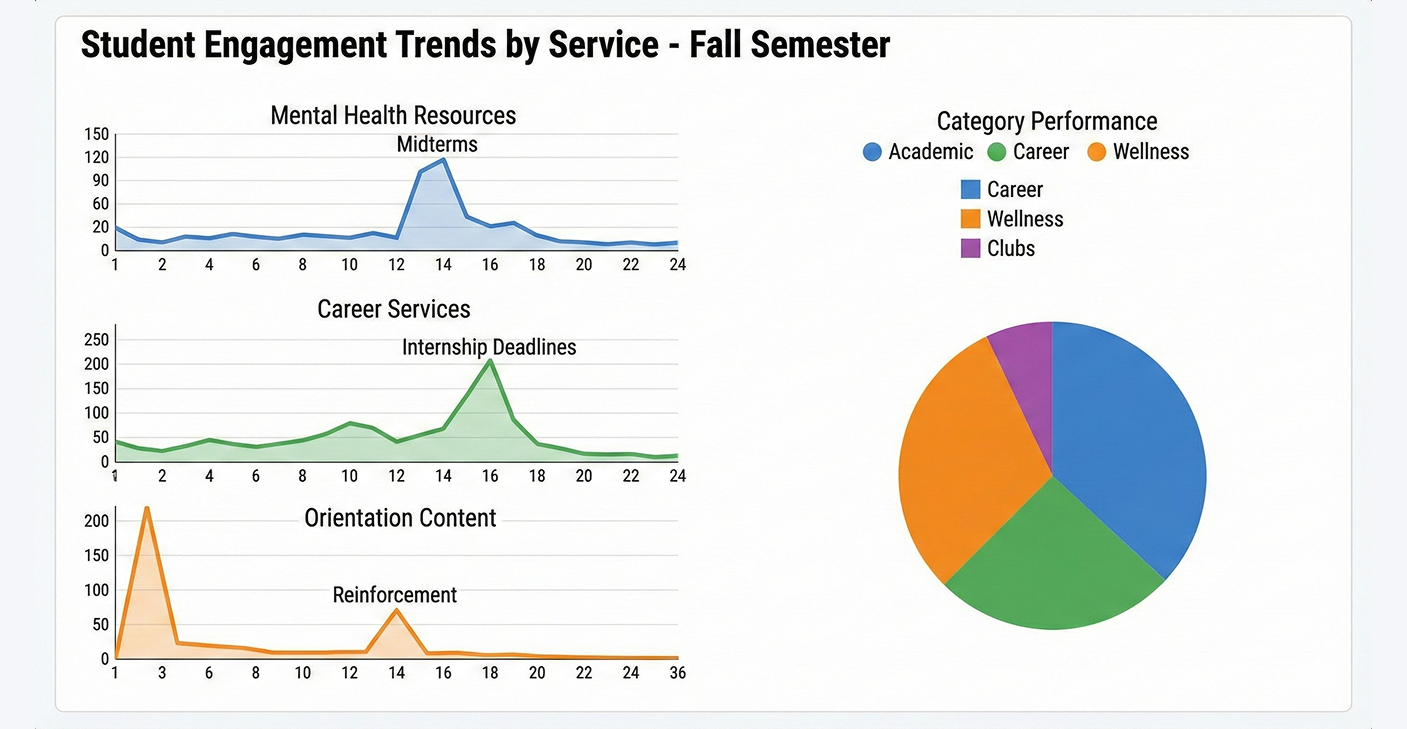
- Students may value mental health resources more during midterms
- Career services may spike before internship deadlines
- Orientation content may need reinforcement weeks later
Data-driven design ensures services align with actual student needs, not outdated expectations.
The Role of University IT Teams in Unlocking Campus Intelligence
University IT teams are uniquely positioned to turn digital infrastructure into strategic assets.
Transforming Digital Systems into Feedback Engines
Instead of treating kiosks and signage as static endpoints, IT teams can enable:
- Centralized analytics dashboards
- Integration across campus systems
- Secure, anonymized data pipelines
This shift elevates IT from maintenance to strategic enablement.
Campus Kiosk Management Platform page →
Ensuring Privacy, Security, and Compliance
Modern campus analytics focuses on aggregated trends rather than personal identification. Best practices include:
- FERPA-aligned data handling
- Anonymized engagement metrics
- Clear student communication around data use
Trust is preserved while insights are unlocked.
How Campus Data Analysts Turn Insights into Action
Data analysts play a critical role in translating raw interaction data into operational and strategic decisions.
Breaking Down Campus Data Silos
When kiosk data is combined with event systems, facilities data, and academic calendars, universities gain holistic visibility into campus life.
Examples include:
- Linking navigation issues to missed events
- Identifying underused spaces
- Optimizing content placement by location
From Dashboards to Decision-Making
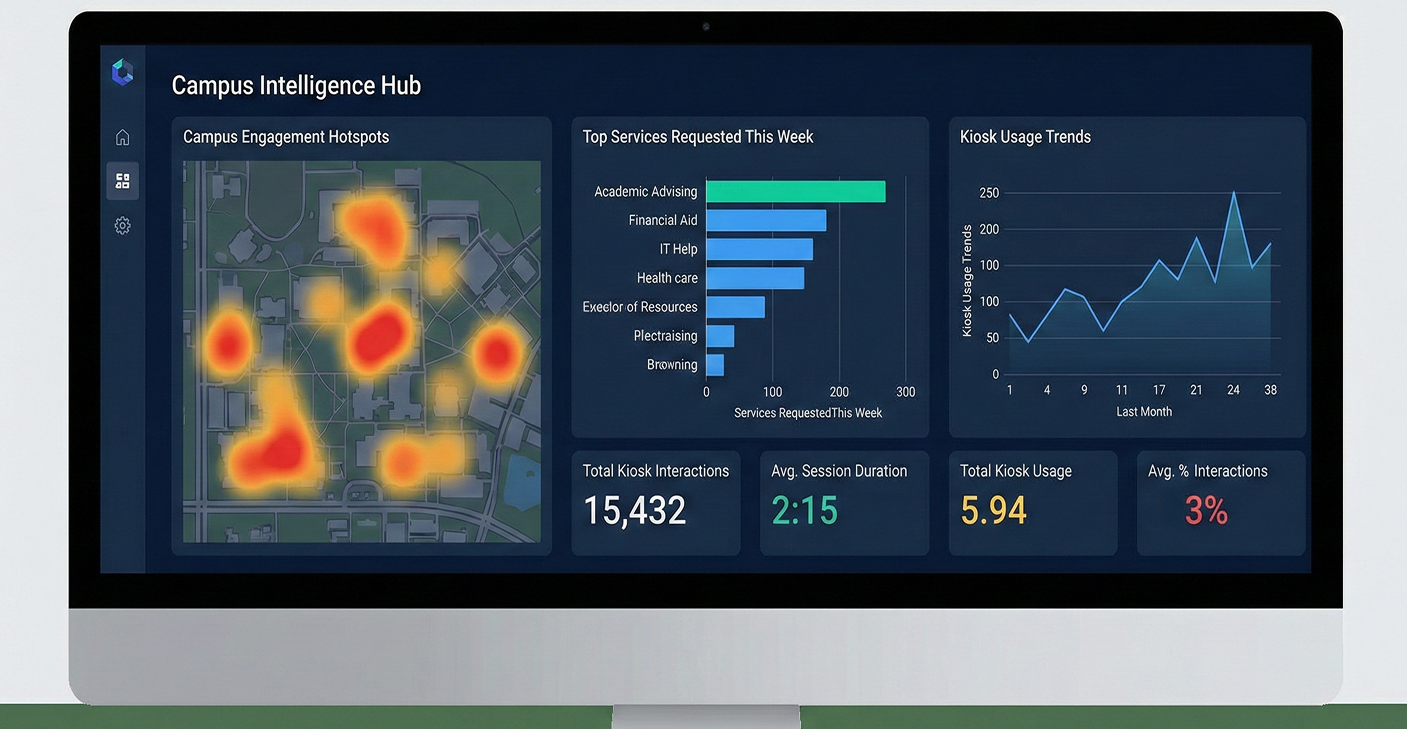
Effective analytics tools provide:
- Clear KPIs
- Trend comparisons over time
- Actionable recommendations
Leadership gains confidence to invest, reallocate resources, and iterate services.
Real-World Use Cases of Data-Driven Campus Improvement
Enhancing Orientation and First-Year Success
First-year students generate high interaction volumes. Analyzing this data helps universities:
- Reduce wayfinding confusion
- Improve onboarding content
- Decrease help desk load
The result is faster student confidence and independence.
Increasing Participation in Academic and Extracurricular Programs
Low attendance often reflects poor visibility, not lack of interest. Engagement data reveals:
- Content students explore but don’t act on
- Optimal timing for promotions
- High-impact locations for digital content
Why Data-Driven Universities Will Outperform Their Peers
Universities that ignore engagement data risk:
- Lower student satisfaction
- Inefficient service delivery
- Missed retention opportunities
Those that embrace it gain agility, clarity, and a competitive edge.
How Platforms Like HootBoard Enable Smarter Campus Decisions
Modern campus platforms like HootBoard combine interactive kiosks, digital signage, and content management with built-in analytics. This allows universities to:
- Monitor student engagement in real time
- Optimize services continuously
- Scale insights across departments
Rather than adding complexity, integrated platforms simplify data-driven campus operations.
University Solutions Overview page →
The Future of Student-Centered Campuses Is Data-Led
The next generation of universities will not be defined by how many digital screens they deploy—but by how intelligently they listen to student behavior.
By leveraging engagement data from kiosks and digital systems, universities can move from reactive service delivery to adaptive, student-first experiences.
Campus data is no longer a byproduct. It is a strategic asset—and institutions that recognize this will shape the future of higher education.