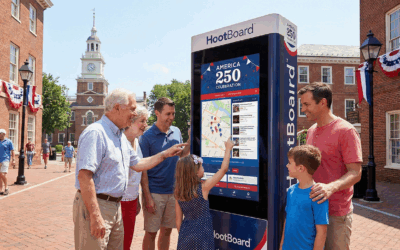
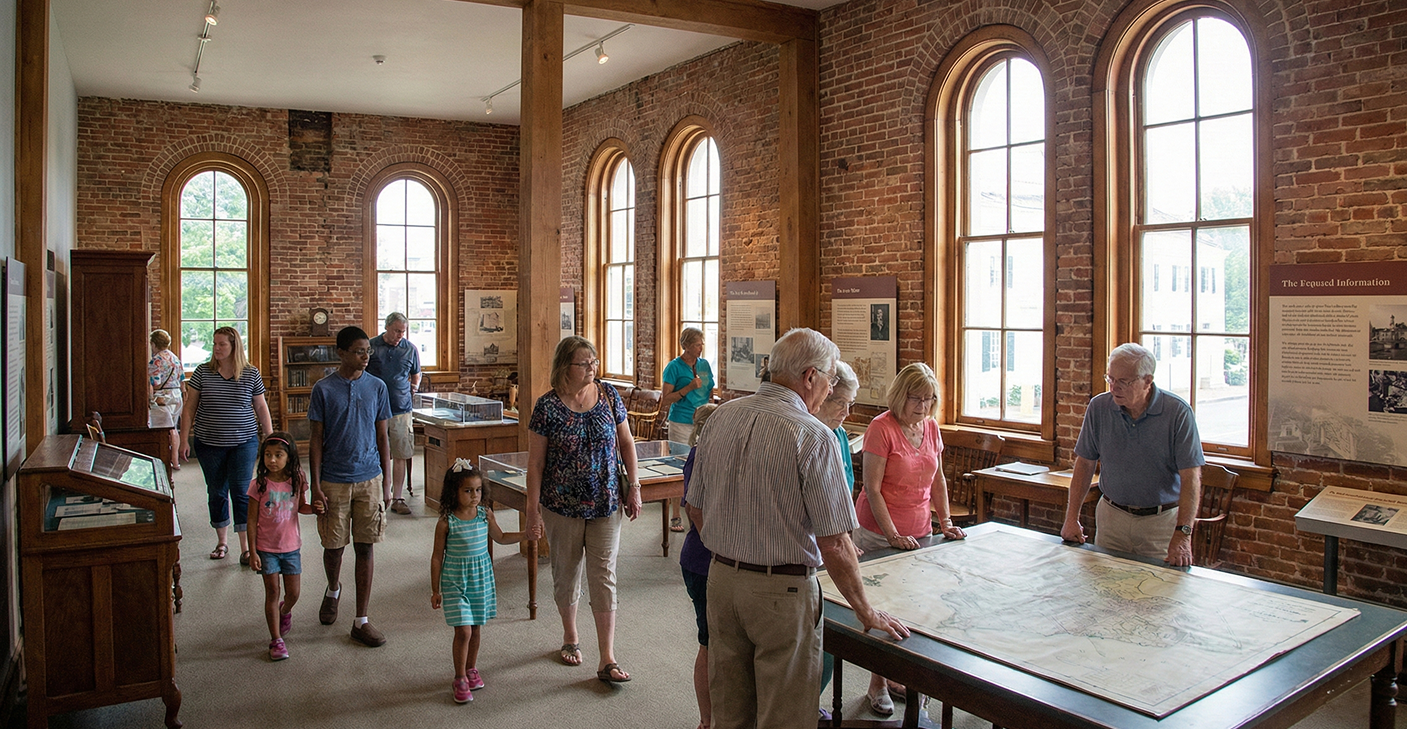
Historic preservation in New Jersey has evolved beyond simply protecting buildings. Today, historic sites are also expected to educate, engage, and serve the public—often with limited staff, limited budgets, and strict preservation constraints.
Visitors want context. They want stories, timelines, maps, and self-guided access. But historic integrity rightly limits what can be installed, mounted, or altered.
What many historic organizations don’t realize is that the New Jersey Historic Trust (NJHT) grant program was designed to address exactly this challenge—not only restoring historic resources, but helping the public understand and engage with them.
When framed correctly, NJHT grants can fund visitor interpretation and heritage tourism infrastructure, including non-invasive digital kiosks like HootBoard.
This guide explains, in detail, how the program works, who qualifies, which grant category applies, what reviewers look for, and how to apply successfully in the 2026 grant cycle.
Understanding the New Jersey Historic Trust Grant Program
The New Jersey Historic Trust (NJHT) is a state agency dedicated to preserving, interpreting, and promoting New Jersey’s historic resources. Its grant programs are competitive and mission-driven, prioritizing projects that deliver clear public benefit while protecting historic fabric.
While restoration projects (roofs, masonry, stabilization) are common, NJHT also funds:
- Interpretation and educational initiatives
- Visitor orientation and wayfinding
- Heritage tourism improvements
- Projects that expand public access to historic information
The key question reviewers ask is not “Is this new technology?” but rather:
“Does this project improve public understanding of history without harming the historic resource?”
That distinction is critical when proposing a visitor kiosk.
Official NJHT Heritage Tourism Grant Program
NJHT administers its Heritage Tourism Grant Program under the Preserve New Jersey framework. This program specifically supports projects that enhance public engagement, interpretation, and visitor experience at historic sites.
You can view the official program details, eligibility requirements, and application guidance directly on the NJHT website here:
👉 https://www.nj.gov/dca/njht/programs/preservenj/heritage-tourism/
This program category is particularly relevant for projects that focus on:
- Visitor interpretation and education
- Heritage tourism infrastructure
- Public access improvements
- Non-invasive enhancements that support storytelling and site understanding
For most kiosk-based projects, this is the correct grant category to reference.
Why Interpretation Projects Matter to NJHT Reviewers
NJHT reviewers are preservation professionals, planners, and historians. They are evaluating risk, stewardship, and public value, not novelty.
Interpretation projects consistently score well because they:
- Improve visitor understanding without physical intervention
- Extend access beyond guided tours
- Reduce reliance on staff for basic education
- Support statewide heritage tourism goals
A visitor kiosk becomes compelling when it is framed as:
“A reversible interpretation system that expands educational access while preserving historic integrity.”
That language aligns directly with NJHT’s evaluation criteria.
Can a Visitor Kiosk Really Be Funded Through NJHT?
Yes—but never as a standalone technology purchase.
A kiosk must be positioned as a component of a broader interpretation or public access project. The application narrative should focus on visitor needs and educational outcomes, with the kiosk presented as the delivery mechanism.
Successful applications typically position kiosks as:
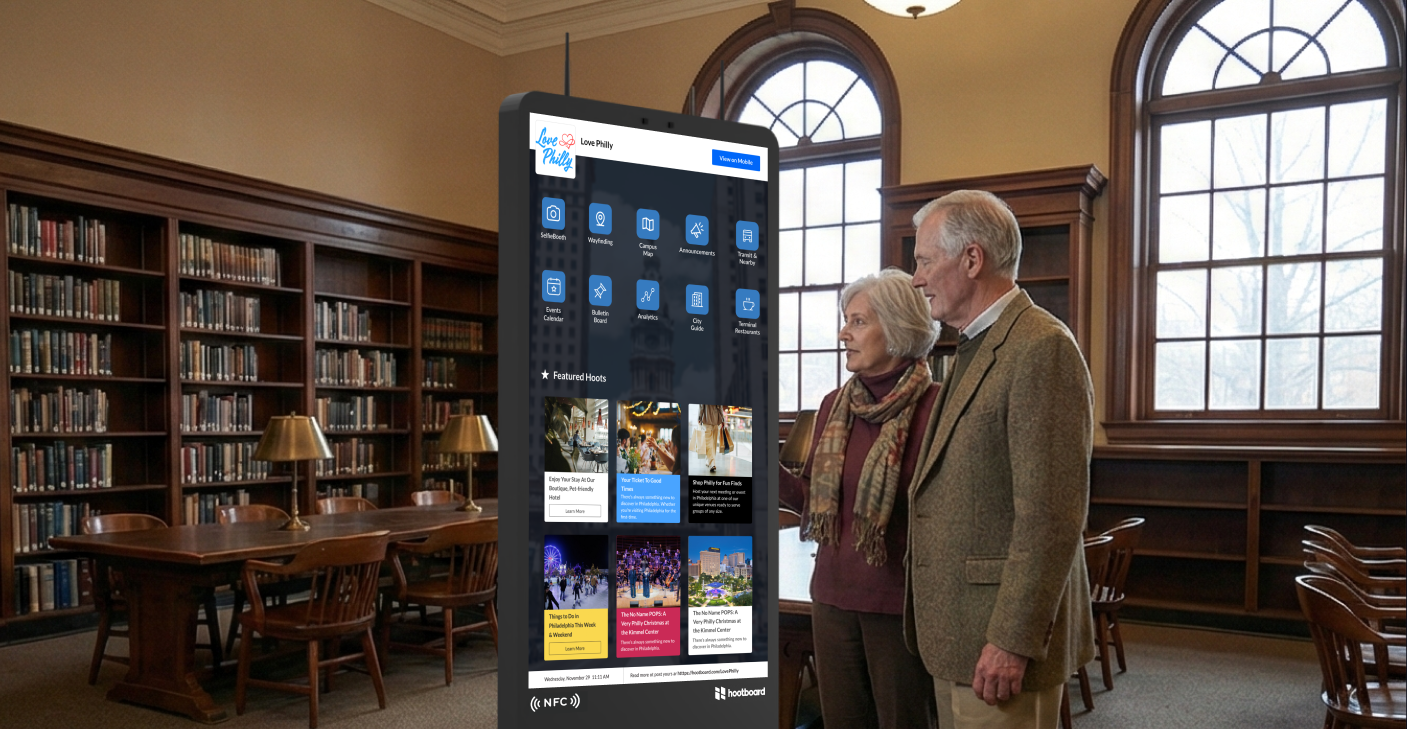
- Digital interpretive panels
- Self-guided tour infrastructure
- Visitor orientation systems
- Access points for archival and educational content
The hardware is never the story. Public education is the story.
Who Is Eligible to Apply?
Eligibility must be addressed clearly and explicitly in the application.
Organizational Eligibility
Applicants must be:
- A nonprofit organization, municipality, or county government
- Mission-aligned with preservation or education
- Administratively capable of managing grant funds
Property Eligibility
The project site must be:
- Listed on the New Jersey Register of Historic Places, or
- Listed on the National Register of Historic Places
Applicants must own the property or demonstrate long-term site control.
Public Access Requirement
NJHT prioritizes projects that serve the public. Sites must:
- Be open to the public on a regular basis, or
- Provide defined public programming
A visitor kiosk often strengthens this requirement by improving access without expanding staffing or hours.
What NJHT Will—and Will Not—Fund
Understanding eligible costs (and describing them correctly) is critical.
Eligible Expenses (Relevant to Kiosks)
- Interpretation infrastructure
- Educational display systems
- Visitor orientation tools
- Non-invasive installation costs
Ineligible Expenses
- Advertising or promotional displays
- Revenue-generating infrastructure
- General operating expenses
- Permanent alterations to historic fabric
Language matters.
Successful applications describe kiosks as:
- “Interpretive display systems”
- “Educational access tools”
- “Visitor engagement infrastructure”
And avoid words like:
- Advertising
- Marketing
- Digital signage
Matching Funds: What Applicants Need to Know
NJHT grants require matching funds to demonstrate commitment and reduce project risk.
Acceptable matching sources include:
- Organizational cash contributions
- Municipal or county funding
- Documented staff time
- Volunteer hours
- Partner or sponsor support
Many successful applicants use NJHT funds to cover part of the interpretation infrastructure cost, with the remainder matched through organizational resources.
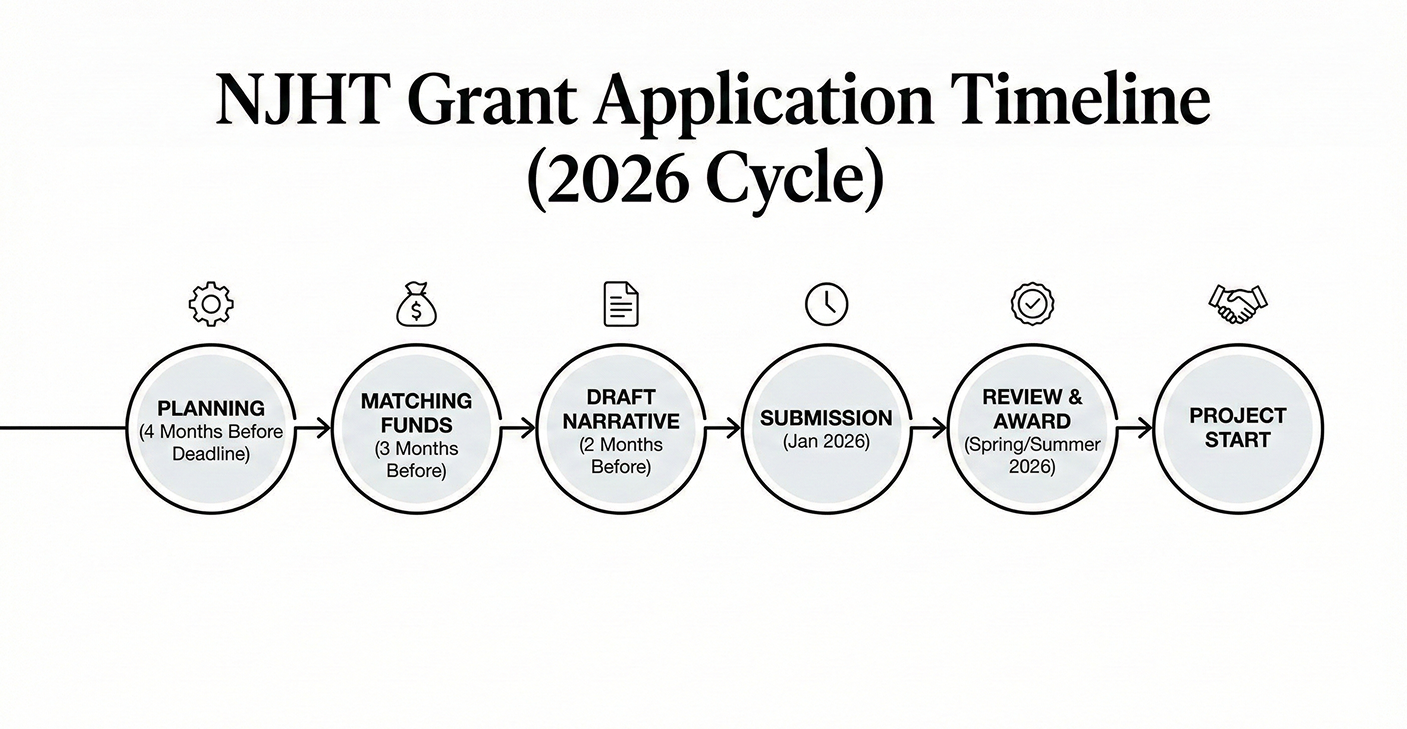
Key Deadlines and Planning Timeline (2026 Cycle)
Exact dates are published annually, but the typical NJHT cycle follows this pattern:
- Fall 2025: Application portal opens
- January 2026: Application deadline
- Winter–Spring 2026: Review period
- Late Spring / Early Summer 2026: Award announcements
Projects may begin only after grant agreements are executed. Retroactive funding is not permitted.
Recommended Planning Timeline
- 4 months before deadline: Define project scope
- 3 months before deadline: Secure matching funds and board approvals
- 2 months before deadline: Draft narrative and budget
- 1 month before deadline: Finalize documentation and submit
How to Apply: A Practical Walkthrough
Step 1: Define the Project Need
Describe current gaps in visitor interpretation, accessibility, or staffing capacity.
Step 2: Describe the Proposed Solution
Introduce the kiosk as a freestanding, non-invasive interpretation system that delivers educational content and supports self-guided learning.
Step 3: Demonstrate Public Benefit
Explain how the project improves visitor understanding, accessibility, and engagement with the site’s historical significance.
Step 4: Prepare a Clear Budget
List the kiosk under interpretation infrastructure and clearly identify matching funds.
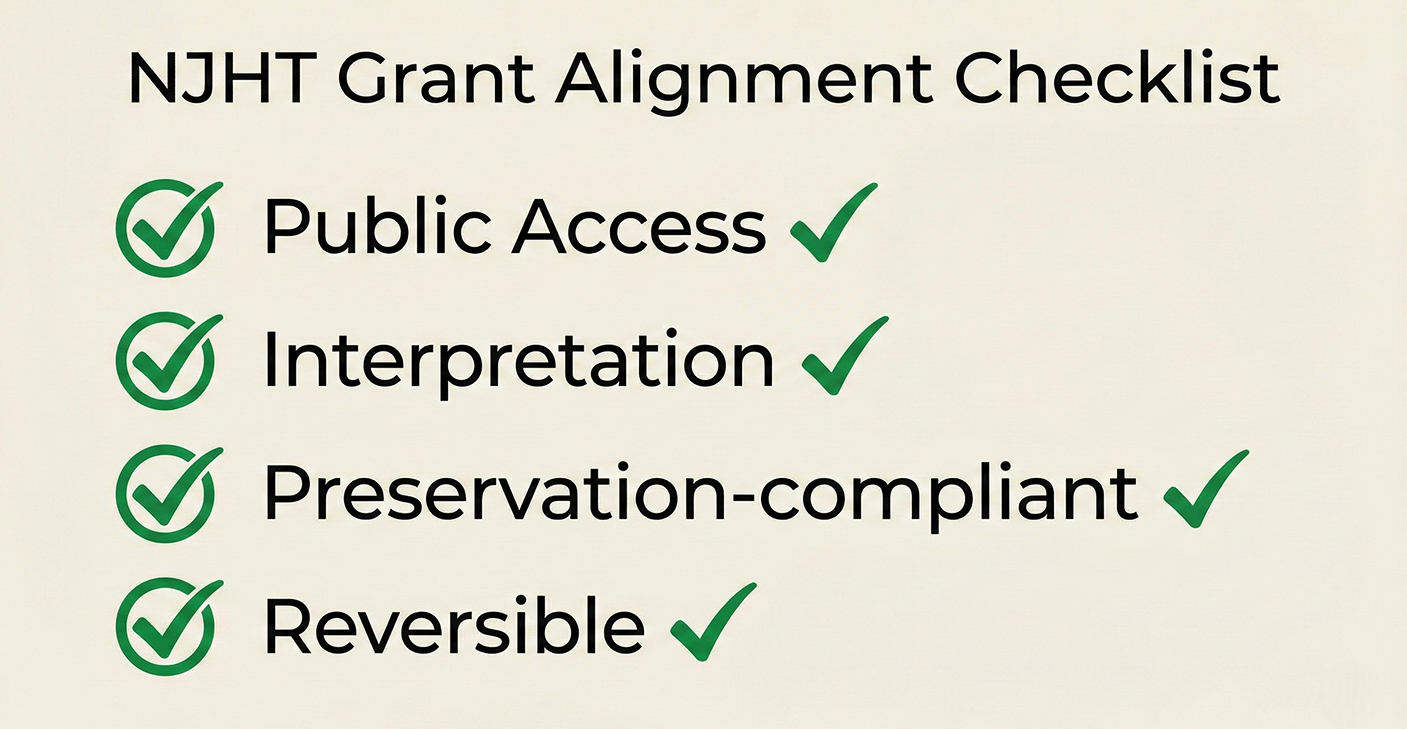
Step 5: Address Preservation Compliance Explicitly
State clearly that:
- The kiosk is freestanding
- No historic fabric will be altered
- Installation is fully reversible
Sustainability and Long-Term Stewardship
NJHT reviewers want to know what happens after the grant period ends.
Strong applications explain:
- Who maintains the kiosk
- How content is updated
- How staff are trained
- That the system can be removed without impact if required
This reassures reviewers that the project represents a responsible, long-term investment.
Common Reasons Similar Projects Are Rejected
Applications like this are often rejected when they:
- Emphasize technology over education
- Fail to clearly address preservation impact
- Include vague or incomplete budgets
- Omit sustainability planning
Avoiding these mistakes significantly improves approval odds.
Final Thoughts
Historic preservation is not just about saving buildings—it’s about ensuring their stories remain accessible, understandable, and relevant.
For New Jersey historic sites seeking to improve visitor engagement without compromising historic integrity, the NJ Historic Trust Heritage Tourism Grant Program offers a powerful and often underutilized opportunity.
When framed correctly, a visitor kiosk like HootBoard becomes not a technology purchase, but a preservation-aligned interpretation investment.