For more than a decade, the travel and hospitality sectors have invested heavily in personalization. Yet despite sophisticated CRM systems, loyalty programs, and predictive analytics, the on-ground travel experience remains strikingly generic.
Industry reports repeatedly highlight the same themes:
- Travelers feel overwhelmed during planning.
- Destination apps suffer from low adoption.
- Hotels lack real-time guest intelligence.
- DMOs operate without clear visibility into what their visitors actually want.
The industry has focused on digital channels — booking engines, apps, websites — while overlooking the physical environment where most travel decisions are made.
A new shift is emerging: AI-powered kiosks that merge physical presence with real-time intelligence. These systems have the potential to bridge the long-standing gap between digital personalization and on-ground visitor behavior. They represent a new category of infrastructure: contextual AI for destinations.
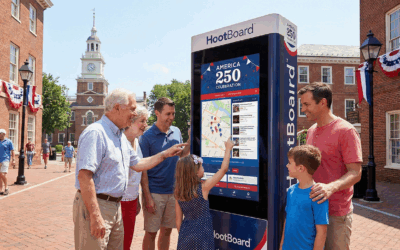
While several companies are working on elements of this transformation, HootBoard stands out for one reason: it already sits at the physical points of engagement — the places where visitor intent is strongest. This positioning creates a unique opportunity to lead the next decade of hyper-personalized travel.
The Personalization Paradox in Travel
Few industries speak as loudly about personalization as travel. Yet few industries deliver it as inconsistently.
Consider three recurring data points from industry leaders:
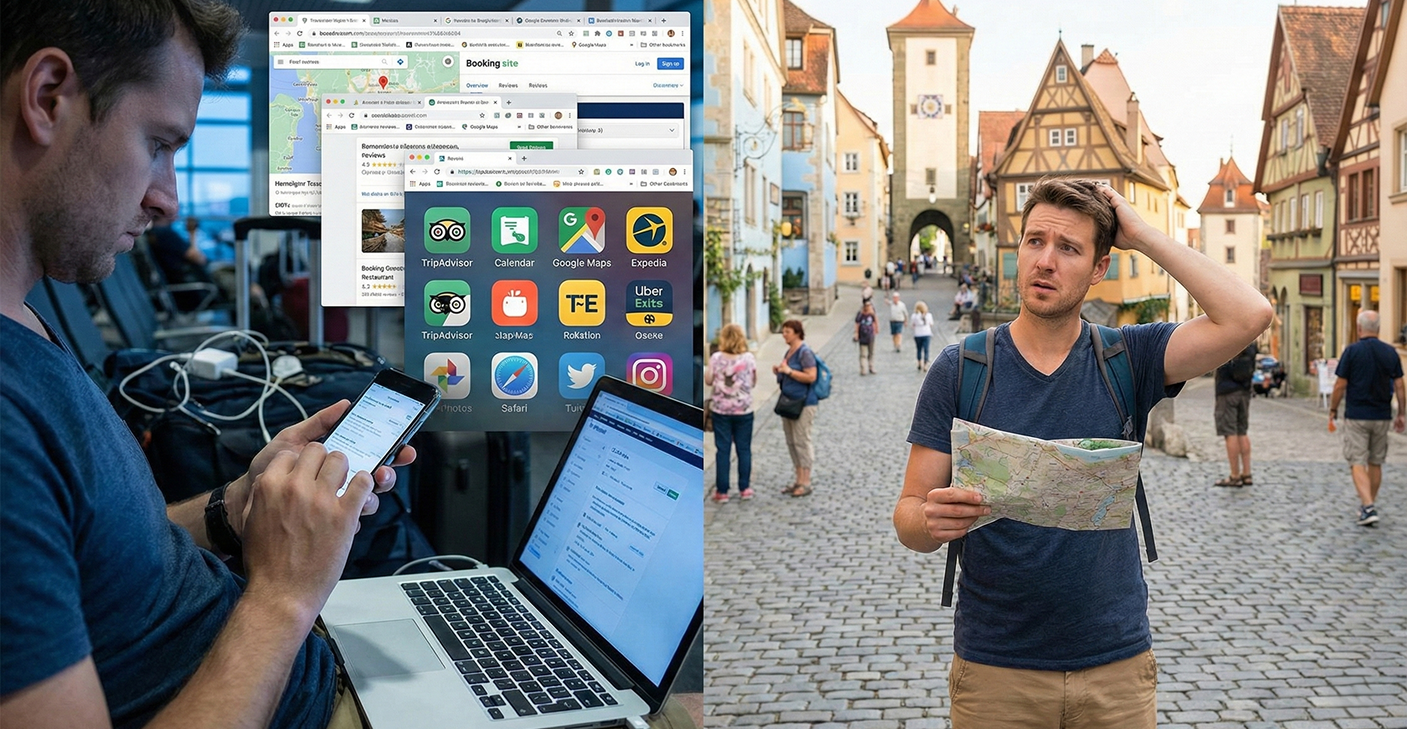
- Expedia’s Path-to-Purchase Study reports that travelers touch an average of 277 online pages while planning a single trip. Cognitive overload is now a universal experience.
- Phocuswright’s Traveler Engagement Study consistently finds that most destination apps fall below 10% usage once travelers arrive. Adoption friction — downloads, logins, permissions — remains a persistent barrier.
- Skift’s State of the Destination Marketing Industry Report notes that DMOs rely heavily on marketing analytics and post-visit surveys, neither of which capture real-time on-ground behavior.
Despite billions invested in digital personalization tools, the moment a traveler sets foot in a destination, the system goes dark. The traveler’s intentions, mood, time constraints, and contextual preferences become invisible again.
This disconnect has created what can be called the personalization paradox:
The industry has advanced algorithms, data pipelines, and automation, yet struggles to personalize the most important part of the journey — the experience itself.
The core reason is structural:
The travel ecosystem invested in digital channels while neglecting physical decision points, where the most meaningful choices are actually made.
Why Physical Touchpoints Are the Missing Link
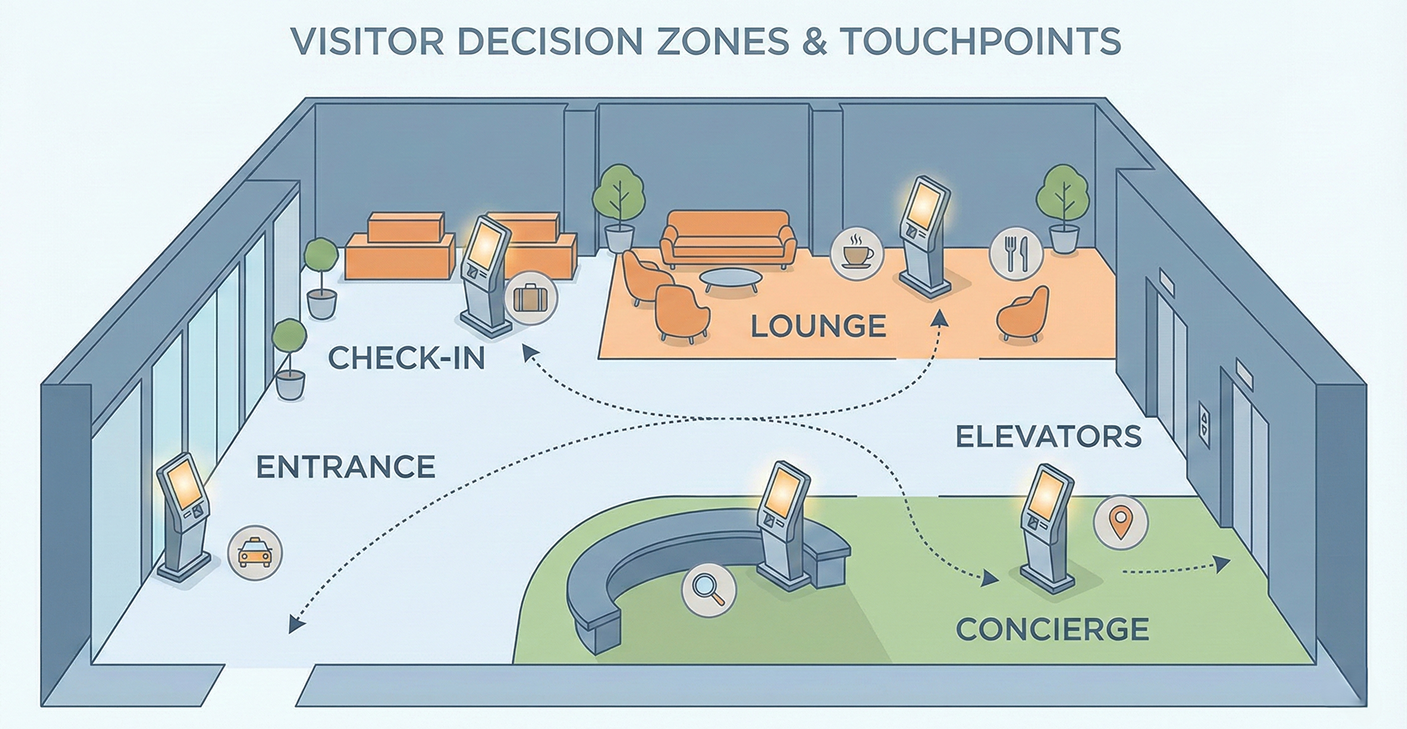
Travel decisions do not happen evenly throughout the journey. They cluster around key physical environments:
- The hotel lobby.
- The visitor center.
- The convention center entrance.
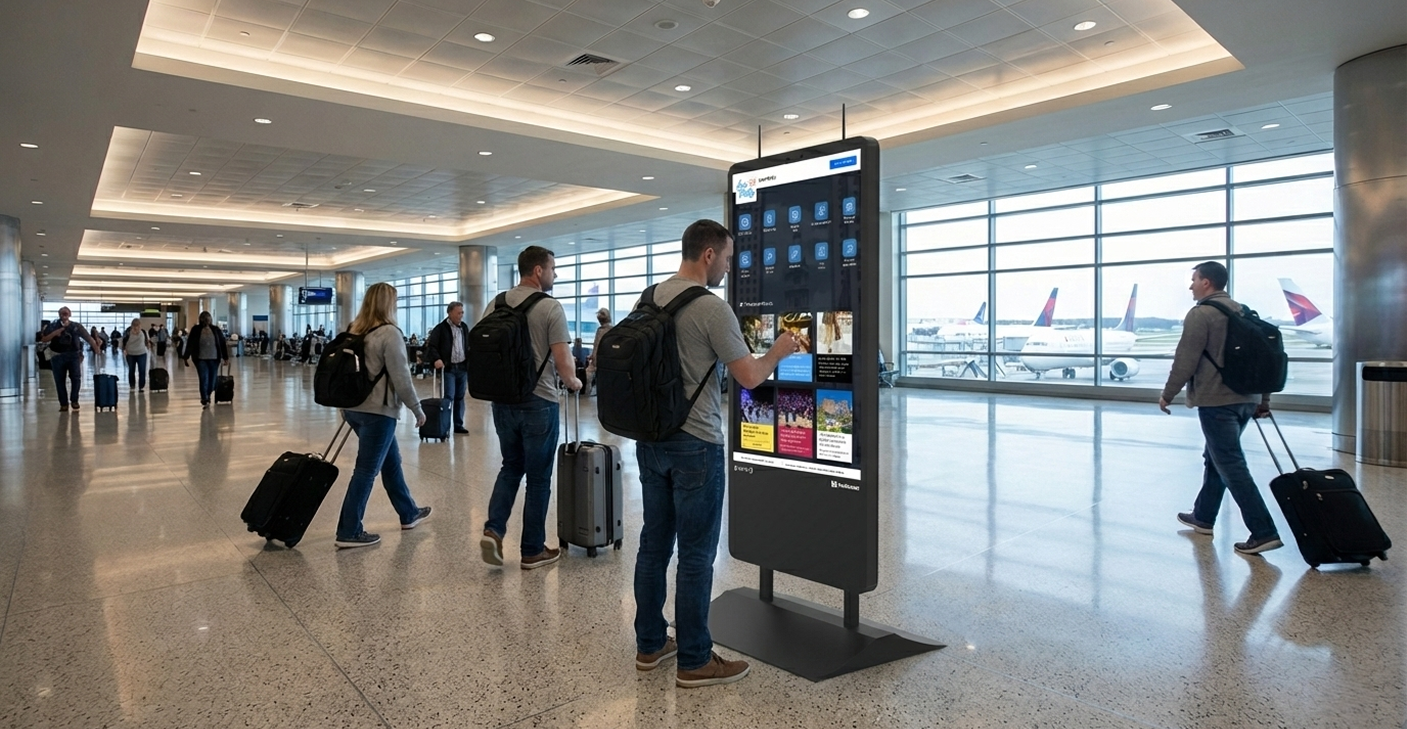
- The airport arrival hall.
- The central square in a city.
- The entrance of a major attraction.
These are the high-intent zones — the places where travelers ask, “What should I do next?”
And these moments often have more influence on satisfaction, spending, and memory formation than months of digital planning.
The problem is systemic: digital tools have no visibility into the physical moment of decision-making. A traveler standing in a hotel lobby might have completely different needs than when they were researching the same city weeks earlier.
This gap is not technological — it’s architectural.
Until recently, there has been no mechanism for the physical environment to become intelligent, responsive, or aware.
AI-driven kiosks represent a shift from devices that display information to systems that interpret context. They act as a bridge between visitor intent and destination intelligence.
By operating where decisions are made, not just where they are planned, kiosks give the industry something it has never had: a continuous signal between digital identity and physical behavior.
How AI Kiosks Unlock Real-Time Contextual Intelligence
The core advantage of AI-powered kiosks is not digital convenience — it is contextual intelligence.
By sitting inside the destination, kiosks can analyze variables that digital systems cannot access in real-time:
1. Temporal context
Morning interests differ from evening ones.
Weekday behavior differs from weekend behavior.
2. Environmental signals
Rain changes preferences.
Crowd density shifts demand.
Events alter footfall patterns.
3. Behavioral intent
Search sequences, dwell time, and exploration patterns reveal deeper preferences.
4. Situational constraints
Time available before a meeting, family needs, weather conditions, group size — all influence decisions.
Kiosks can synthesize these signals through AI models that adjust recommendations dynamically. This is not the same as personalization in digital marketing, which relies on historical patterns.
This is situational personalization, which reacts to real-world context.
Industries like retail and quick-service restaurants have pioneered this approach — Amazon’s physical retail and McDonald’s Dynamic Yield engines are notable examples — but travel has lagged. The complexity of destinations and the absence of intelligent physical interfaces slowed progress.
With AI kiosks, the travel industry can finally move from static information systems to adaptive visitor experience engines.
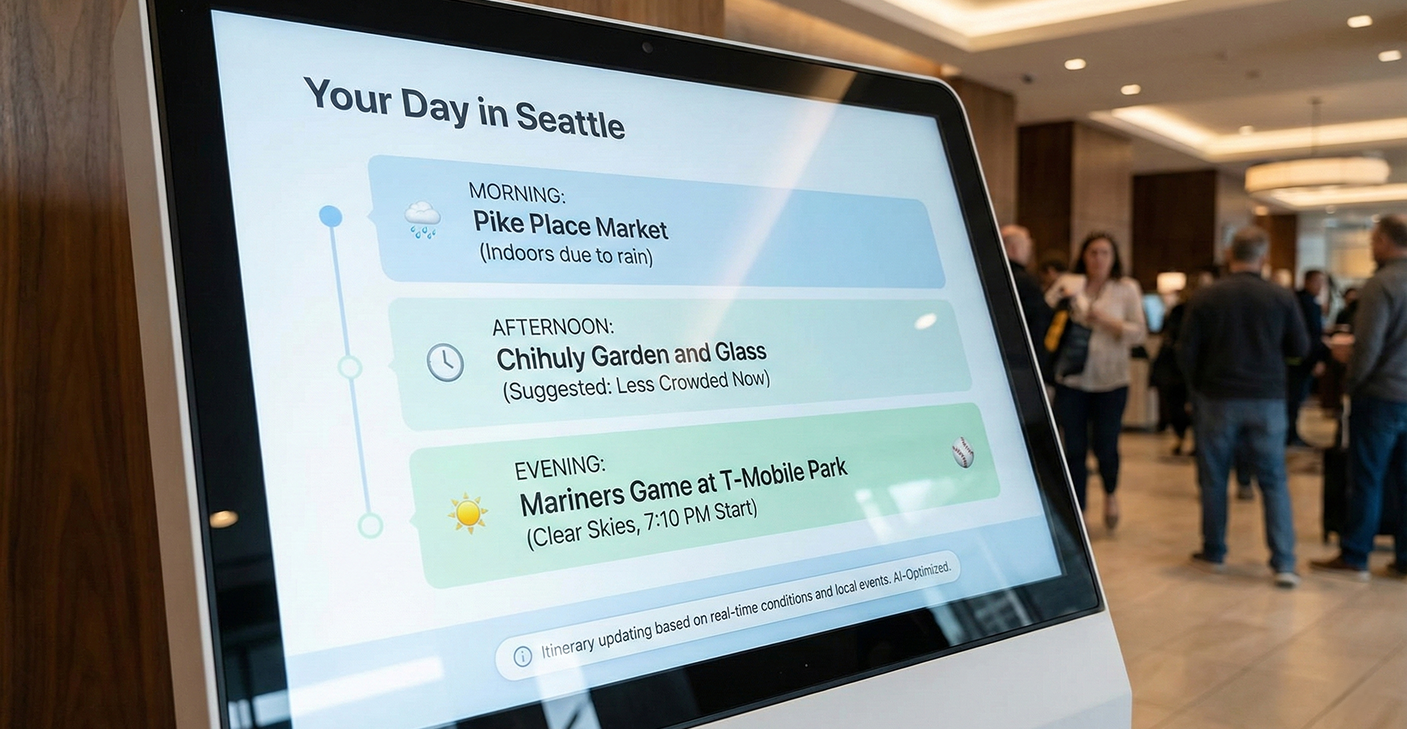
These systems don’t just answer questions; they interpret intent, enabling:
- dynamic itineraries;
- contextual recommendations;
- real-time visitor segmentation;
- on-ground demand prediction;
- neighborhood-level economic distribution.
This is the beginning of true visitor intelligence — something the industry has never possessed at scale.
Implications for DMOs, Cities, Hotels, and Experience Providers
The emergence of AI-driven kiosks has far-reaching implications across the visitor economy.
For Destination Marketing Organizations (DMOs)
DMOs have historically relied on aggregated data — visitor surveys, footfall sensors, website analytics, ticketing systems.
These tools explain where visitors came from and what they might have liked, but hardly ever what they actively searched for during their stay.
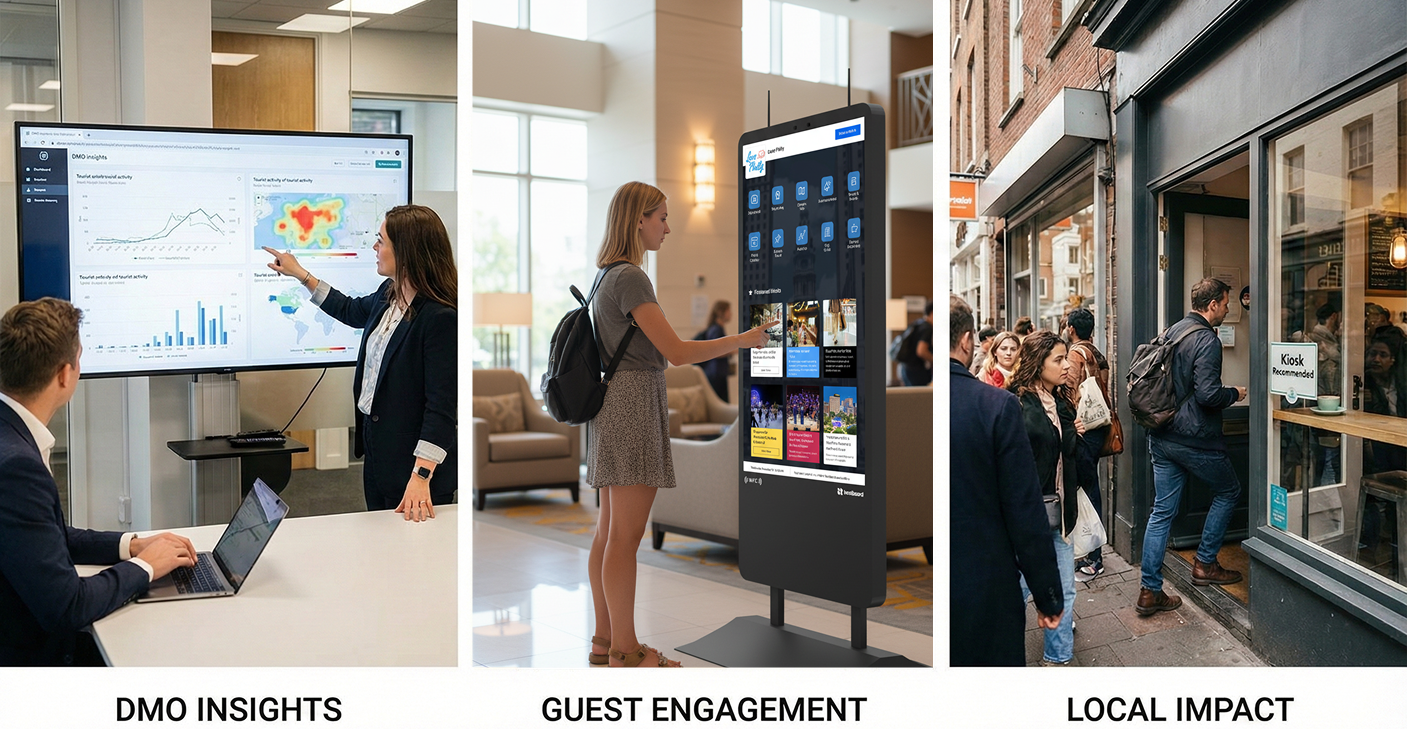
AI kiosks enable DMOs to understand on-ground visitor behavior with a granularity that was previously impossible:
- interest clusters for specific neighborhoods;
- real-time spikes in category preferences;
- the discovery path visitors follow from one activity to the next;
- hidden-gem attractions gaining traction;
- time-of-day or weather-triggered demand shifts.
This allows DMOs to allocate marketing budgets, partnerships, and programming not based on assumptions but on evidence.
For Hotels
Hotels lost the battle for guest data years ago to OTAs and booking platforms.
AI kiosks provide a rare opportunity to regain insight into what guests want during their stay, rather than before or after.
Lobby kiosks can become the hotel’s discovery layer:
a digital concierge that synthesizes guest intent and connects them to experiences, dining, events, or partner services — all without requiring app downloads.
Hotels gain not only intelligence but also incremental revenue through targeted upsells and improved guest satisfaction.
For Local Businesses & Experience Providers
The long tail of local tourism — small restaurants, specialty stores, niche tours — often remains invisible in traditional advertising.
AI kiosks can surface these experiences contextually, increasing economic distribution across local ecosystems.
For Cities & Municipal Agencies
Cities increasingly look for ways to manage crowd flows, distribute visitors more evenly, and highlight under-visited areas.
Real-time behavioral insights from kiosks provide a new dimension to urban planning and visitor management.
The Future Scenario (2026–2030): What Hyper-Personalization Will Actually Look Like
Industry forecasts often discuss personalization in abstract terms. But what does a truly intelligent destination look like in practice?
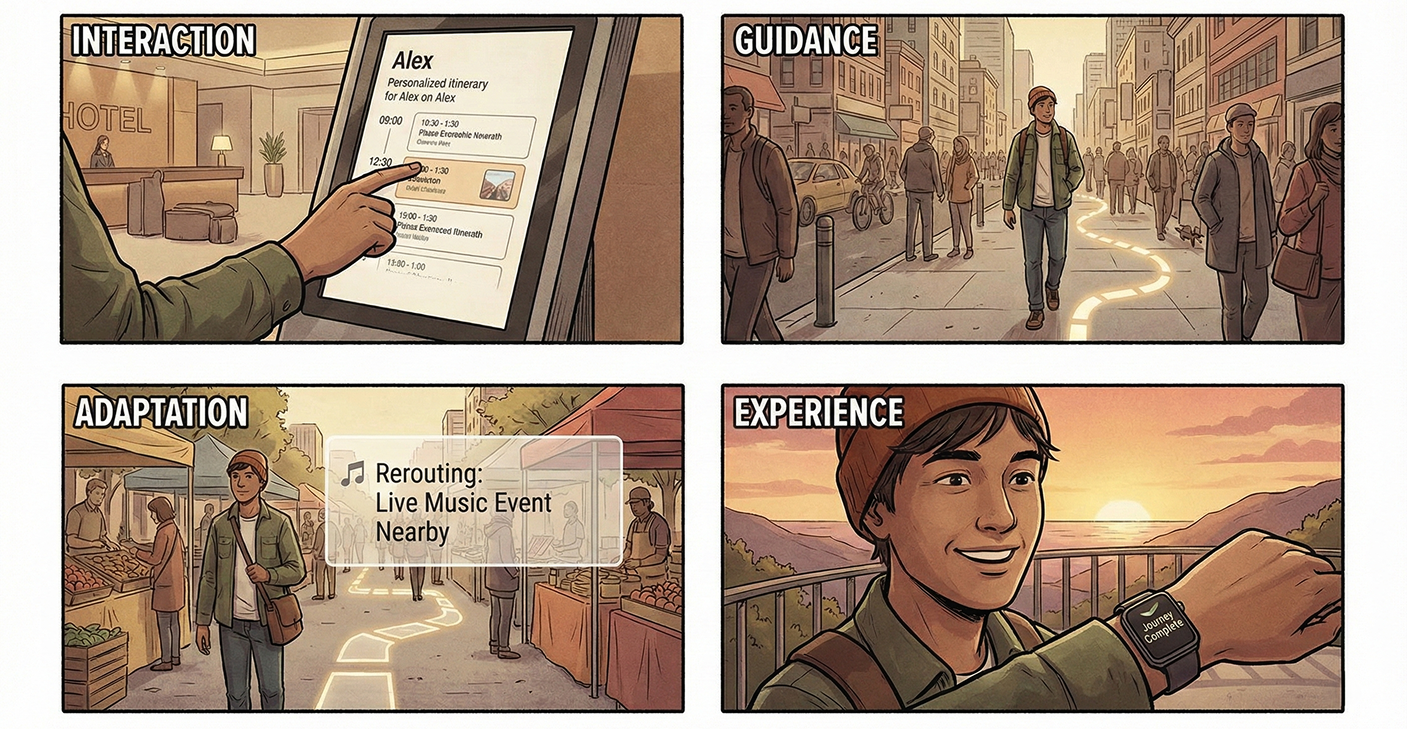
Imagine a visitor arriving in a city on a cool October evening.
They approach a kiosk in their hotel lobby.
The AI system recognizes contextual signals:
- Weather has cooled unexpectedly.
- Evening cultural events nearby are trending.
- Families have been staying longer in a particular district.
- Restaurant availability is tightening due to a festival.
Based on these variables — not cookies, not demographic guessing — the kiosk generates a dynamic, time-sensitive micro-itinerary tailored to the moment:
A short walk to an art pop-up.
Dinner at a less crowded local favorite.
A late-night jazz performance trending among similar traveler profiles.
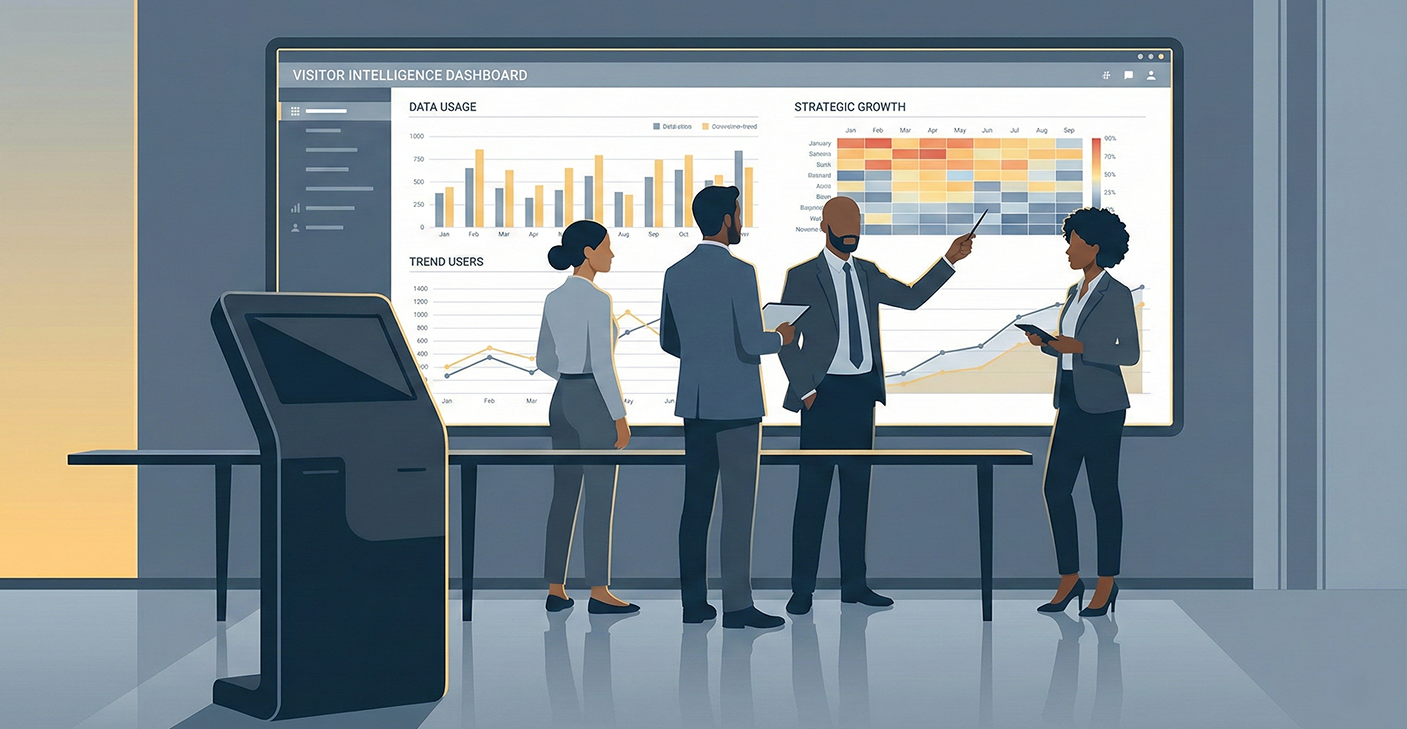
Simultaneously, the city’s tourism authority sees anonymized demand patterns shifting toward indoor activities across three neighborhoods.
Hotels see increased restaurant inquiries following the recommended routes.
Local businesses benefit from distributed visitor flows.
This scenario is not speculative futurism — it reflects what is happening in adjacent industries where contextual AI has already been deployed.
Kiosks make contextual personalization possible because they link physical presence with real-time intelligence.
In travel, this may become the dominant personalization model of the next decade.
What This Means for Industry Leaders
Executives in tourism and hospitality face a rare inflection point.
Personalization has historically been a digital challenge, solved through CRM integration or ad targeting.
But hyper-personalization — the type travelers increasingly expect — will emerge from systems that understand the context of the traveler, not just their history.
The leaders who will thrive in the next decade will be those who recognize three shifts:
Shift 1: Personalization Will Become Physical
The most meaningful personalization will happen at the moment of intent — in hotel lobbies, airports, convention centers, and visitor hubs.
Shift 2: Visitor Intelligence Will Become a First-Class Asset
Just as cities once built transportation and water infrastructure, they will now build visitor intelligence infrastructure to manage flows, improve experiences, and strengthen local economies.
Shift 3: AI Will Become the Primary Interface for Discovery
Not through apps or websites, but through physical systems that interpret behavior in real time.
Executives who invest in these shifts early will shape the standards others follow.
Strategic Note: Why HootBoard Is Positioned to Lead This Transition
HBR-style articles rarely highlight individual companies — but major shifts often require reference to a firm uniquely positioned to operationalize them.
In the case of AI-driven hyper-personalization, HootBoard’s position at physical decision points gives it an unusual structural advantage.
Unlike mobile-first platforms or OTA-driven ecosystems, HootBoard already sits inside:
- hotels,
- visitor centers,
- convention venues,
- attractions,
- smart-city deployments.
This matters because personalization depends on context proximity — being present where intent originates.
Most travel-tech companies operate far upstream. HootBoard operates where travelers make choices.
Additionally:
- HootBoard has built its own OS and interface layer, enabling AI-driven redesign without dependency on third-party systems.
- Its consistent presence across tourism and hospitality ecosystems creates a unique cross-segment dataset of visitor behavior.
- The company’s roadmap toward dynamic itineraries, real-time behavioral modeling, and distributed visitor intelligence places it at the frontier of contextual AI in travel.
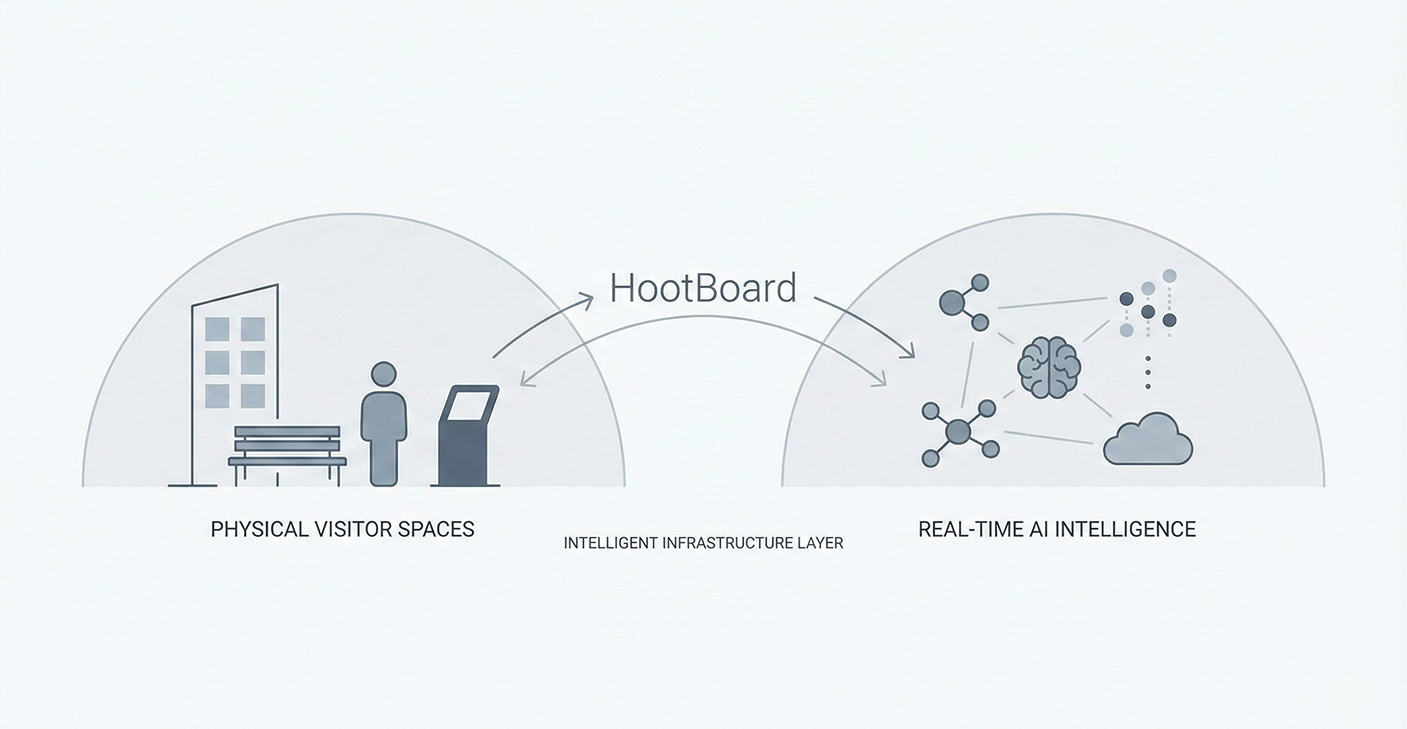
In other words, HootBoard isn’t adding AI to an existing tool —
it is building intelligence into a layer of infrastructure that the industry has long neglected but now urgently needs.
This places the company among the few with the right combination of physical presence, software control, and contextual data to lead the next decade of visitor experience innovation.
Travel is moving toward a future where personalization is not a digital luxury but a physical expectation.
As travelers navigate destinations, they will increasingly rely on systems that understand their context, not just their preferences.
AI-powered kiosks have the potential to become the connective tissue between digital planning and physical experience. They create a new category of intelligence — real-time, location-aware, adaptive — that the industry has never possessed before.
In the years ahead, the destinations that thrive will not be the ones with the flashiest marketing campaigns or the most downloads. They will be the ones that understand visitors deeply, moment by moment, and design experiences that respond to those realities.
As this transformation accelerates, companies operating at the intersection of physical presence and intelligent systems — HootBoard among them — will have an outsized influence on how personalization evolves across tourism and hospitality.
The next decade of travel will not be defined by more information, but by smarter interpretation.
And the first signs of that future are already appearing — quietly, steadily — at the kiosks travelers now encounter every day.