Executive Summary: A Quiet Shift Most Partners Are Underestimating
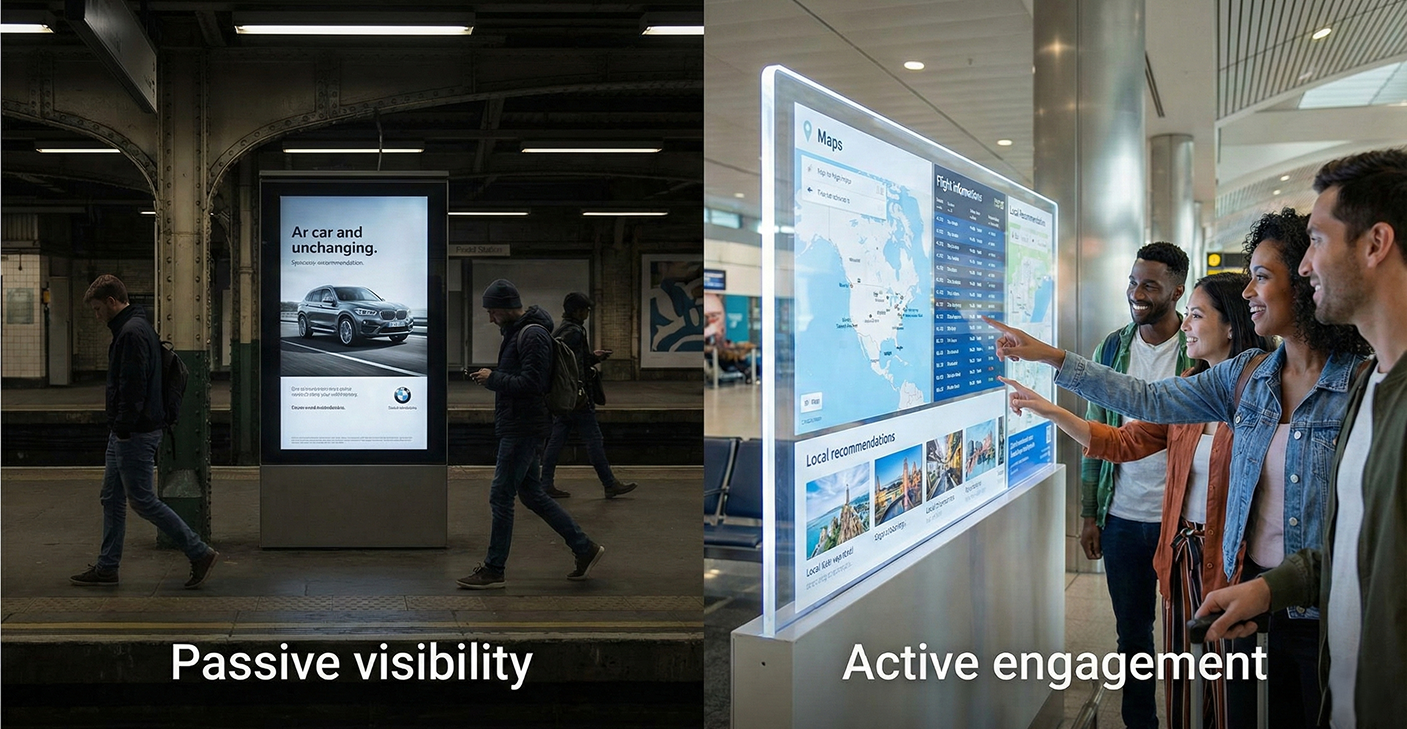
For more than a decade, the AV and digital signage industry has grown by selling visibility. Better screens. Bigger walls. Sharper resolution. Faster processors. Cleaner installs.
That era is ending.
As we move into 2026, clients across tourism, public infrastructure, campuses, workplaces, and hospitality are no longer impressed by what can be displayed. They are focused on what can be understood.
They want to know:
Who is engaging?
What information is being searched?
Where people get confused or drop off?
Which content actually drives action?
How physical spaces perform over time?
This shift is not theoretical. It is already reshaping how budgets are approved, how vendors are evaluated, and where long-term revenue flows.
For partners, this marks a defining moment: remain a screen supplier, or evolve into a provider of insight-driven experiences.

The Experience Economy Has Entered Its Measurement Phase
Over the last few years, experience has become a serious investment category. Cities are upgrading public information systems. Tourism boards are rethinking how visitors move through destinations. Campuses are redesigning navigation, engagement, and student services. Workplaces are modernizing internal communication and space utilization.
But something fundamental has changed.
Experience is no longer funded on promise alone. It is now expected to perform.
Across sectors, decision-makers face increasing pressure to justify spend. Public bodies must defend budgets with outcomes. Institutions must show efficiency and satisfaction improvements. Marketing teams must move beyond impressions toward engagement and action.
As a result, experience infrastructure is being evaluated less like a branding asset and more like a measurable system. The question is no longer whether a screen looks good in a space, but whether it improves how that space functions.
This is where traditional digital signage begins to fall short.
Why Screens Are Becoming Commodities
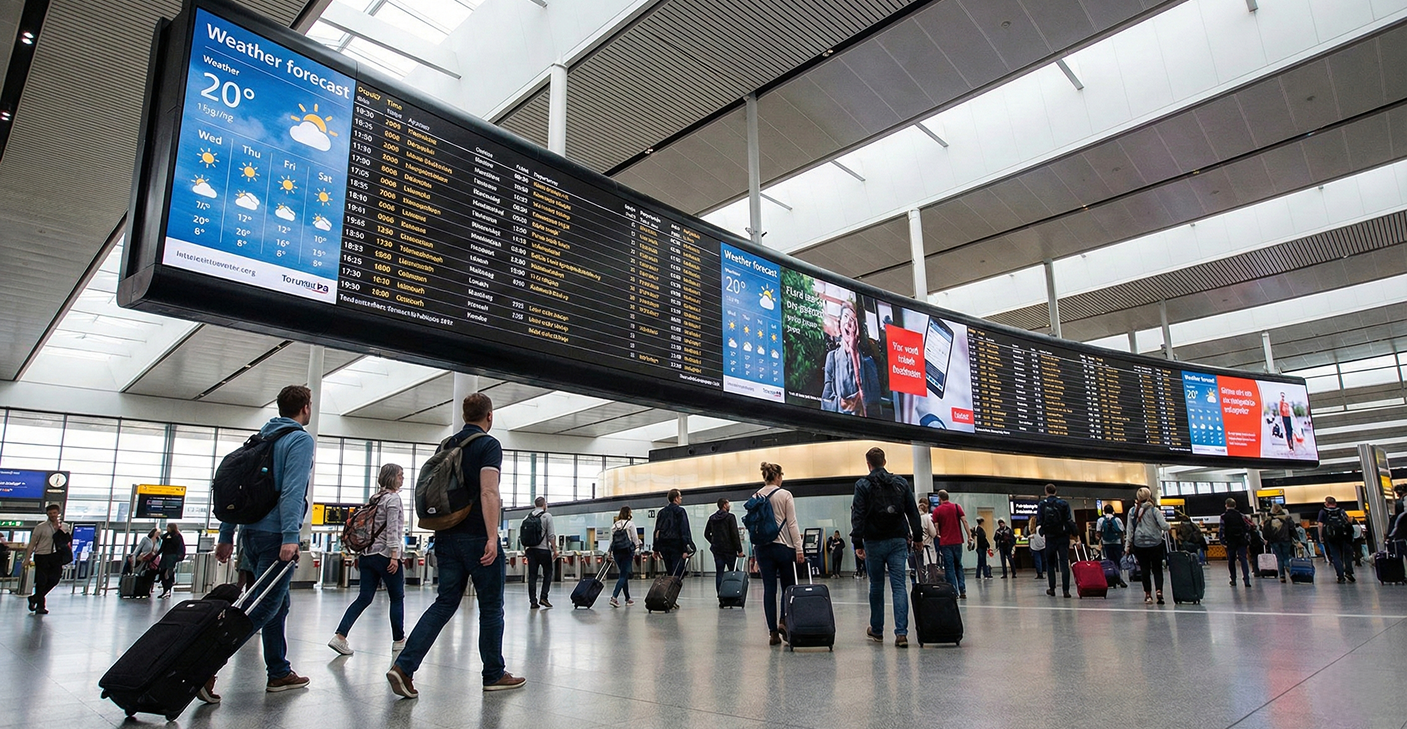
Hardware has become easier to source, cheaper to manufacture, and harder to differentiate. Supply chains have stabilized. Competition has intensified. Procurement teams increasingly compare vendors on price, lead time, and warranties.
At the same time, internal expectations placed on buyers have increased.
Tourism teams are asked to show visitor satisfaction improvements. Campus administrators are measured on student experience and retention. Facilities teams must optimize flow and reduce friction. Marketing teams are expected to demonstrate real engagement, not passive exposure.
Static screens struggle in this environment. They display information but do not adapt. They broadcast but do not respond. Most importantly, they do not explain what worked and what didn’t.
As a result, screens alone are no longer the value. They are simply the surface.
What Visitor Intelligence Actually Means
Visitor intelligence is often misunderstood.
It is not surveillance.
It is not facial recognition.
It is not invasive data collection.
At its core, visitor intelligence is the ethical, consent-aware understanding of how people interact with digital touchpoints in physical environments.
It captures patterns rather than identities. Signals rather than individuals. Behavior rather than personal data.
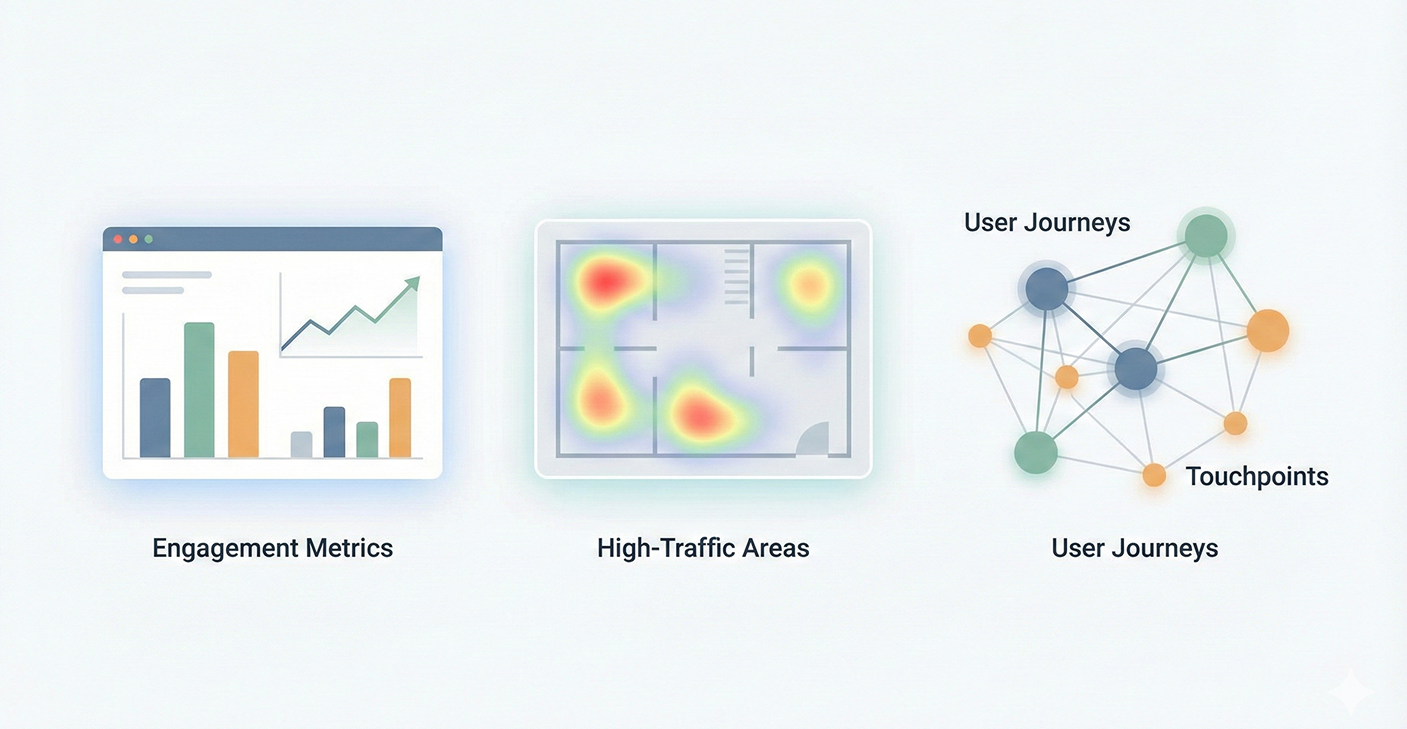
In practice, this means understanding what visitors search for, where they hesitate, which paths are overused or underused, what content gets ignored, and what information consistently drives action.
Over time, these insights allow organizations to improve layouts, refine messaging, reduce friction, and allocate resources more effectively.
In simple terms, it is the physical-space equivalent of analytics — insight that turns experience into a system that can be improved.
Why Interactive Experiences Consistently Outperform Static Displays
Across industries, a clear pattern has emerged.
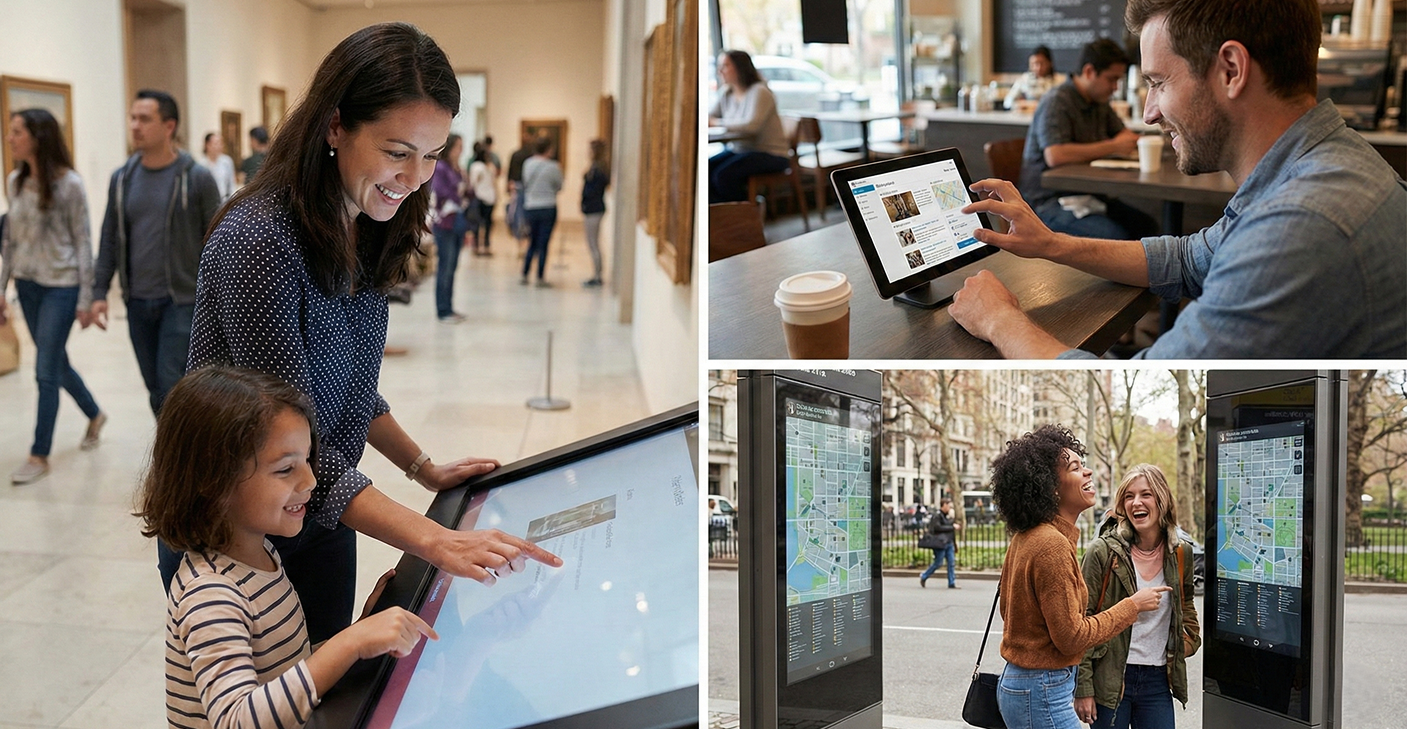
Interactive touchpoints hold attention longer. They reduce confusion. They shift visitors from passive observers to active participants. Most importantly, they create feedback loops that allow organizations to learn and adapt.
Wayfinding reduces staff interruptions. Search-driven interfaces reveal demand patterns. Interactive content builds trust because it responds to intent rather than pushing messages.
As expectations rise, interactivity is no longer seen as an enhancement. It is becoming the baseline.
The real advantage, however, is not the interaction itself — it is the intelligence generated by that interaction.
Why Clients Are Actively Seeking Insight-First Partners
Buyers are no longer satisfied with vendors who install and disappear.
They are looking for partners who help them interpret data, justify investment, improve outcomes, and plan future phases. They want fewer suppliers and more strategic collaborators.
This changes the partner’s role entirely.
The conversation moves from hardware specifications to experience outcomes. From installation timelines to long-term performance. From one-time projects to ongoing relationships.
For partners, this is not a threat. It is an elevation.

The Revenue Shift Few Partners Are Planning For
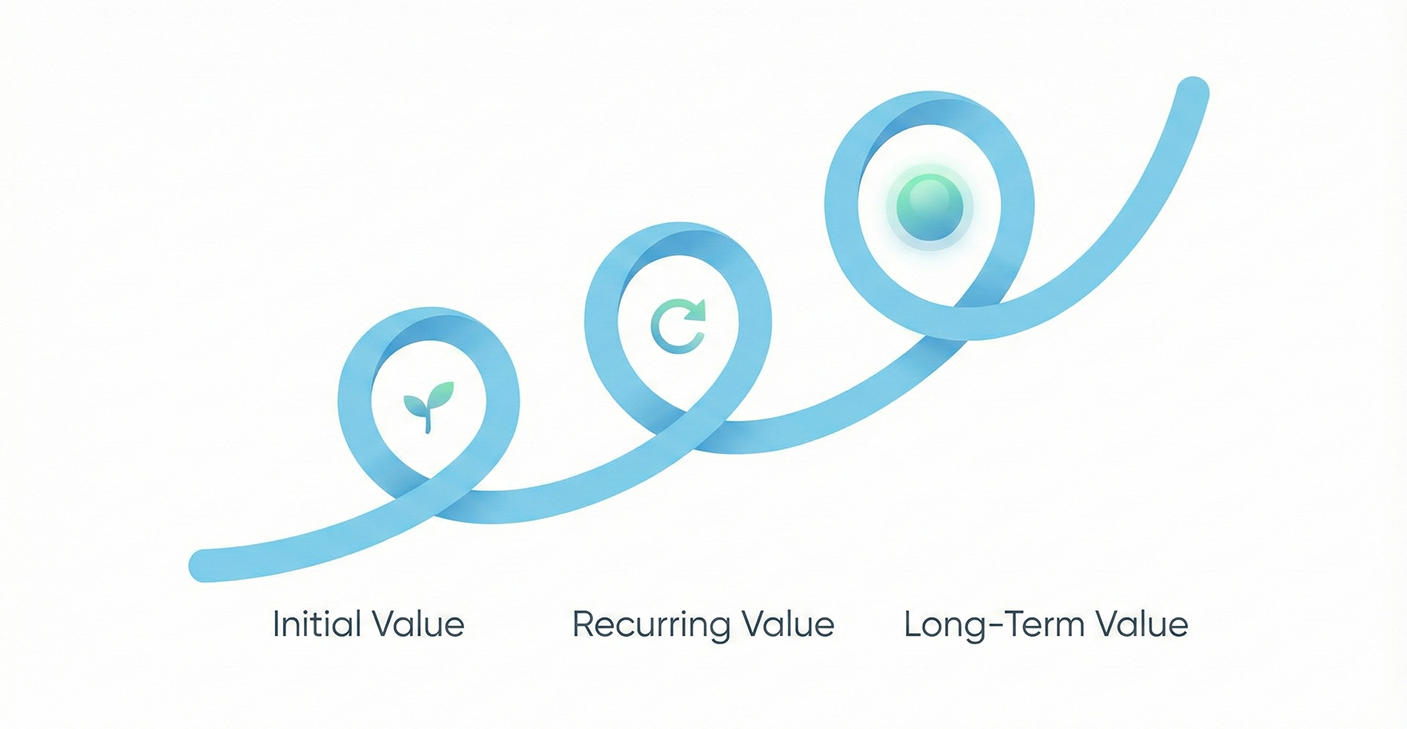
Traditional AV models rely heavily on one-time transactions. Revenue peaks at installation and declines rapidly afterward.
Intelligence-driven models behave differently.
Software, analytics, content optimization, and ongoing improvement create recurring value. They extend customer lifetime, reduce churn, and make pricing less sensitive.
In many cases, the intelligence layer eventually outpaces hardware revenue — not by selling more screens, but by staying relevant long after installation.
What This Means for 2026 Planning
As budgets are finalized for 2026, buyers will favor solutions that explain themselves. Systems that generate insight. Infrastructure that improves over time.
Partners who succeed will speak the language of outcomes, not installs. They will bundle intelligence into every deployment. They will remain involved after go-live. They will educate clients before competitors do.
Those who do not risk being reduced to price comparisons.

Final Thought for Partners
The next decade of digital infrastructure will not be won by bigger screens or louder displays.
It will be won by understanding how people move, search, pause, and decide within physical spaces.
Visitor intelligence is no longer emerging.
It is becoming expected.
The real question for partners is not whether this shift will happen, but whether they will lead it — or be left installing the past.