The America 250 Foundation has already designated 2026 as a year-long celebration with anchor events concentrated around July 4th, but the opportunity window extends from 2025 through 2027 as visitors plan multi-destination heritage tours, educational trips, and patriotic pilgrimages. DMOs equipped with modern tourism technology infrastructure will convert casual interest into confirmed visits, extended stays, and measurable economic impact.
Why the 250th Anniversary Creates a Structural Shift in Visitor Behavior
Unlike typical tourism marketing campaigns that compete for discretionary travel budgets, the US 250th anniversary taps into a deeper emotional driver: national identity and historical connection. Research from the National Park Service on heritage tourism shows that milestone anniversaries (bicentennial in 1976, for example) create 40-60% spikes in visitation to historically significant destinations, with elevated interest persisting 18-24 months beyond the actual anniversary date.
For DMOs, this means three things:
- 1. Visitors are actively seeking historical experiences
- They’re not passively consuming ads—they’re researching, planning, and looking for authentic historical touchpoints. Interactive wayfinding kiosks positioned at high-traffic arrival points (airports, train stations, highway welcome centers, downtown visitor centers) become the first credible information source for travelers arriving with intent but no fixed itinerary.
- 2. The competitive set has expanded dramatically
- Destinations aren’t just competing with their traditional regional rivals anymore. When a family from Phoenix is planning their ‘250th heritage tour,’ they’re comparing Philadelphia, Boston, Williamsburg, Charleston, Lexington, and Gettysburg simultaneously. You need to be discoverable at the moment of decision—which increasingly happens in-market, not pre-trip. Digital tourism kiosks provide that critical last-mile conversion infrastructure.
- 3. Visitors are traveling in mixed-generation groups
- The 250th anniversary appeals across demographics—Gen Z history enthusiasts, millennial parents seeking educational experiences, Gen X nostalgia seekers, and boomers reliving their 1976 bicentennial memories. Each cohort has different technology expectations. Interactive visitor information systems with touchscreen interfaces, QR code itinerary builders, multilingual support, and accessibility features serve all segments without requiring app downloads or pre-planning.
Strategic Infrastructure Deployment: Where Interactive Kiosks Drive Maximum ROI During America 250
Not all kiosk placements deliver equal value. DMOs capitalizing on the 250th anniversary need to think beyond traditional visitor center deployments and establish digital wayfinding networks at high-conversion decision points.
Tier 1: Arrival Points (Highest Conversion Infrastructure)
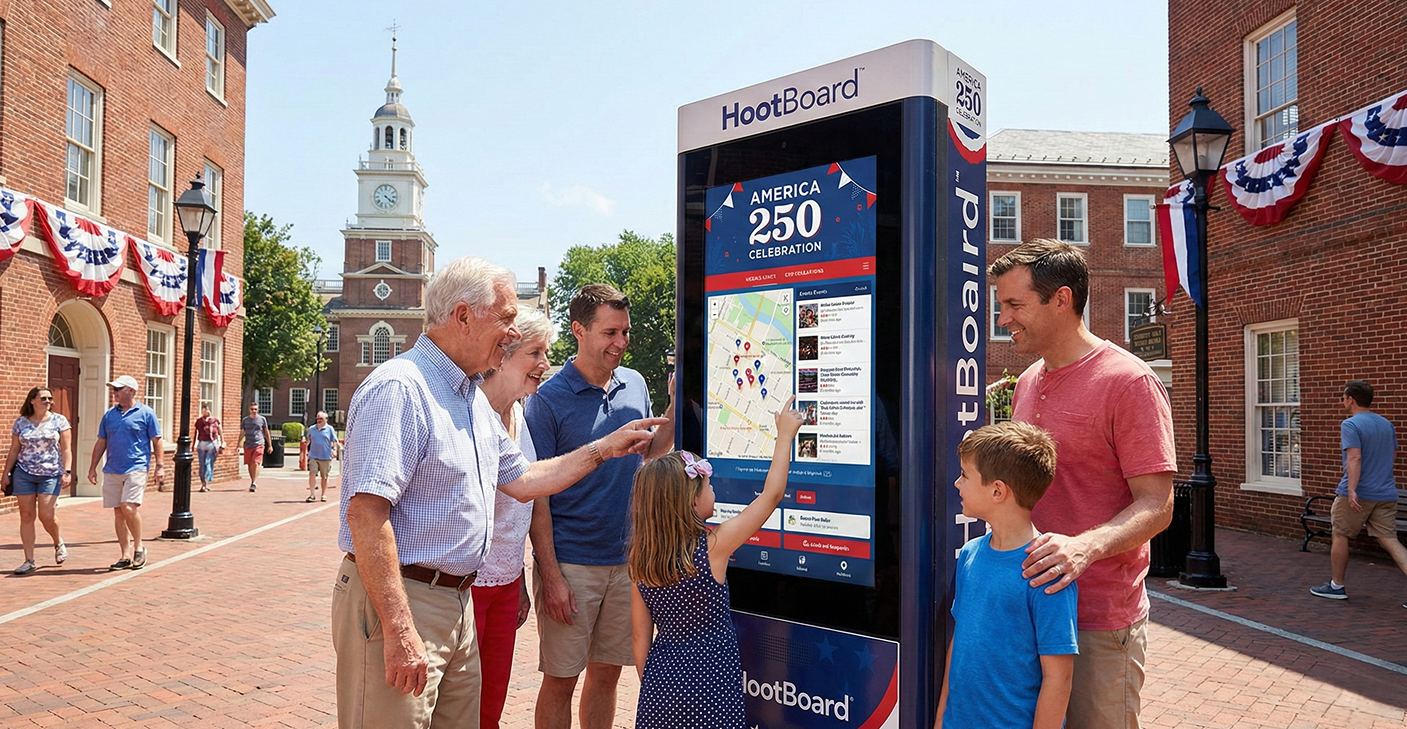
Regional airports, Amtrak stations, interstate welcome centers. These locations capture visitors in their first 30 minutes in-market when they’re most receptive to spontaneous itinerary additions. A family that landed in Philadelphia for Independence Hall might not have Betsy Ross House or Museum of the American Revolution on their radar until an interactive destination kiosk suggests them with real-time availability, walking directions, and mobile itinerary export.
Key features for arrival point kiosks:
- Real-time event calendars showing 250th anniversary programming
- Hotel availability integration (not booking, just awareness)
- Multilingual support (Spanish, Mandarin minimum for international visitors)
- QR code itinerary export to mobile device
- Transportation options (rideshare, public transit, walking routes)
Tier 2: Downtown Nodes (Extended Stay Drivers)
Hotel lobbies, main street retail districts, public squares, museum entrances. Visitors have already arrived and are in discovery mode. These smart city tourism kiosks extend stays by surfacing less-obvious attractions, dining, and evening entertainment that keep visitors engaged beyond their pre-planned marquee stops.
Cornell University’s hospitality research shows that spontaneous activity additions during trips generate 35% higher satisfaction scores and 28% increased spending versus pre-planned rigid itineraries. Interactive kiosks lower the friction to discovery.
Content Strategy: What Converts Browsers to Visitors on Interactive Kiosks
The technology is table stakes. What separates high-performing destination marketing kiosks from digital brochure stands is content strategy calibrated to visitor intent and the America 250 moment.
Anchor Content: 250th Anniversary Programming Calendar
Every kiosk should feature a dynamically updated calendar of local America 250 events—reenactments, concerts, exhibits, lectures, parades, fireworks. Visitors are specifically seeking these programming types. Make them filterable by date, family-friendly status, free vs. paid, and indoor vs. outdoor.
Integration with CRM systems allows DMOs to track which events drive the most kiosk engagement, informing future programming investment and sponsorship sales.
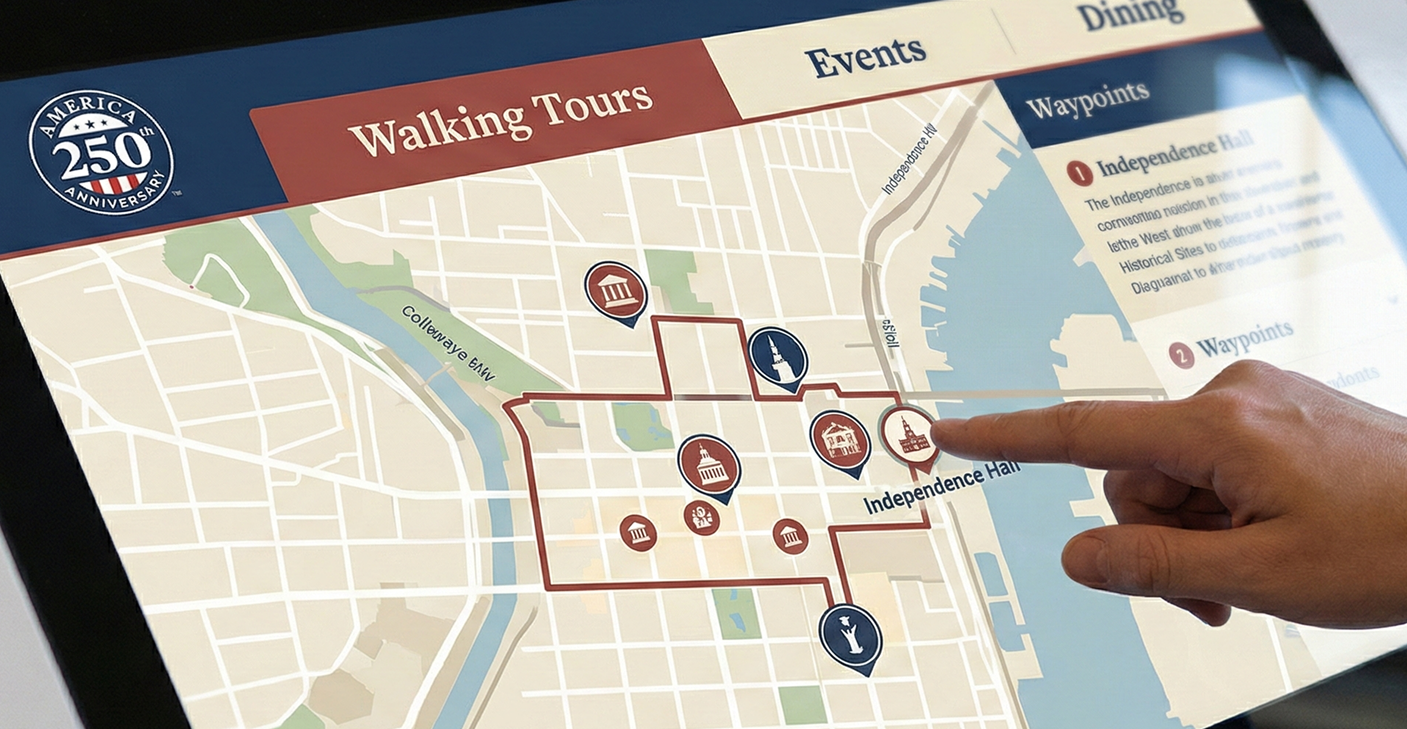
Contextual Wayfinding: Historical Walking Tours
Don’t just list attractions—create themed walking routes. ‘Revolutionary War Sites,’ ‘Women in the Founding,’ ‘African American History Trail,’ ‘Architecture of Independence.’ Each route should include:
- Estimated walking time
- Accessibility notes
- Restroom locations
- Recommended dining/coffee stops midway
- Mobile map export via QR code
Revenue Generation: How Interactive Kiosk Networks Pay for Themselves During America 250
DMOs operating on constrained budgets can offset tourism technology infrastructure costs through strategic advertising partnerships tied to the 250th anniversary surge.
Sponsorship Model: America 250 Official Sponsors
Approach regional and national brands seeking America 250 association rights. Hotels, restaurants, tour operators, transportation companies, and retail all want visibility during this high-traffic period. Offer tiered sponsorship packages:
- Presenting Sponsor: Logo on kiosk hardware, 30-second video loop between user sessions, featured placement in ‘Where to Stay’ or ‘Where to Eat’ categories. $25,000-$50,000 annual depending on network size.
- Category Sponsor: Exclusive placement within dining, lodging, or transportation categories. $10,000-$20,000 annual.
- Event Sponsor: Co-branded promotion of specific 250th programming. $5,000-$15,000 per event.
Data Licensing: Visitor Behavior Intelligence
Anonymized, aggregated data from interactive visitor information systems has commercial value. Which attractions get the most kiosk searches? What times of day? Which walking tours? Which language preferences dominate? This intelligence helps:
- Hotels optimize pricing and inventory allocation
- Restaurants adjust staffing and hours
- Tour operators refine programming
- Retail identifies product gaps
Offer quarterly data reports to stakeholders as part of annual partnership fees. Typical pricing: $2,500-$7,500 per stakeholder annually for aggregated trend access.
Measurement & Attribution: Proving Interactive Kiosk ROI to Stakeholders
Smart digital tourism kiosk deployments generate trackable engagement metrics that traditional print materials and static signage cannot provide:
- User Sessions: Total interactions, average session length, time of day patterns, language selections
- Content Performance: Most-viewed attractions, most-exported walking tours, most-clicked event listings
- Conversion Actions: QR code scans (mobile export), phone calls initiated, direction requests, itinerary saves
- Geographic Origins: For kiosks with optional check-in prompts (zip code, country)
Present these metrics quarterly to tourism boards, city councils, and business improvement districts to demonstrate infrastructure value and justify continued investment beyond the anniversary year.
Implementation Timeline: When to Deploy for Maximum America 250 Impact
Q1 2025: RFP process, vendor selection, content strategy development. Secure sponsorships early when brands are allocating 2025-2026 budgets.
Q2-Q3 2025: Hardware procurement, installation, content population, staff training. Soft launch to work out technical issues before peak season.
Q4 2025: Full activation. Early-planning visitors begin researching 2026 trips during holiday season. Kiosks capture this intent.
2026: Peak performance. Continuous content updates, sponsor fulfillment, data reporting.
2027: Sustained operations. The infrastructure remains valuable for ongoing visitor engagement; transition messaging from anniversary focus to evergreen destination marketing.
The window to capitalize on America’s 250th anniversary is narrow. DMOs that deploy interactive kiosk networks and digital wayfinding infrastructure in 2025 will capture visitor interest, drive incremental spending, and establish market leadership that extends well beyond the anniversary year. Those who delay will watch competitors convert the visitors they spent marketing dollars to attract.
Start planning now. The 250th anniversary isn’t just a celebration—it’s a structural tourism opportunity that rewards strategic infrastructure investment.