Destination Marketing Organizations (DMOs) and tourism-led businesses are operating in a radically different landscape than even five years ago. Travelers are more informed, more impatient, and far more experience-driven. Simply having a website, mobile app, or social media presence is no longer enough.
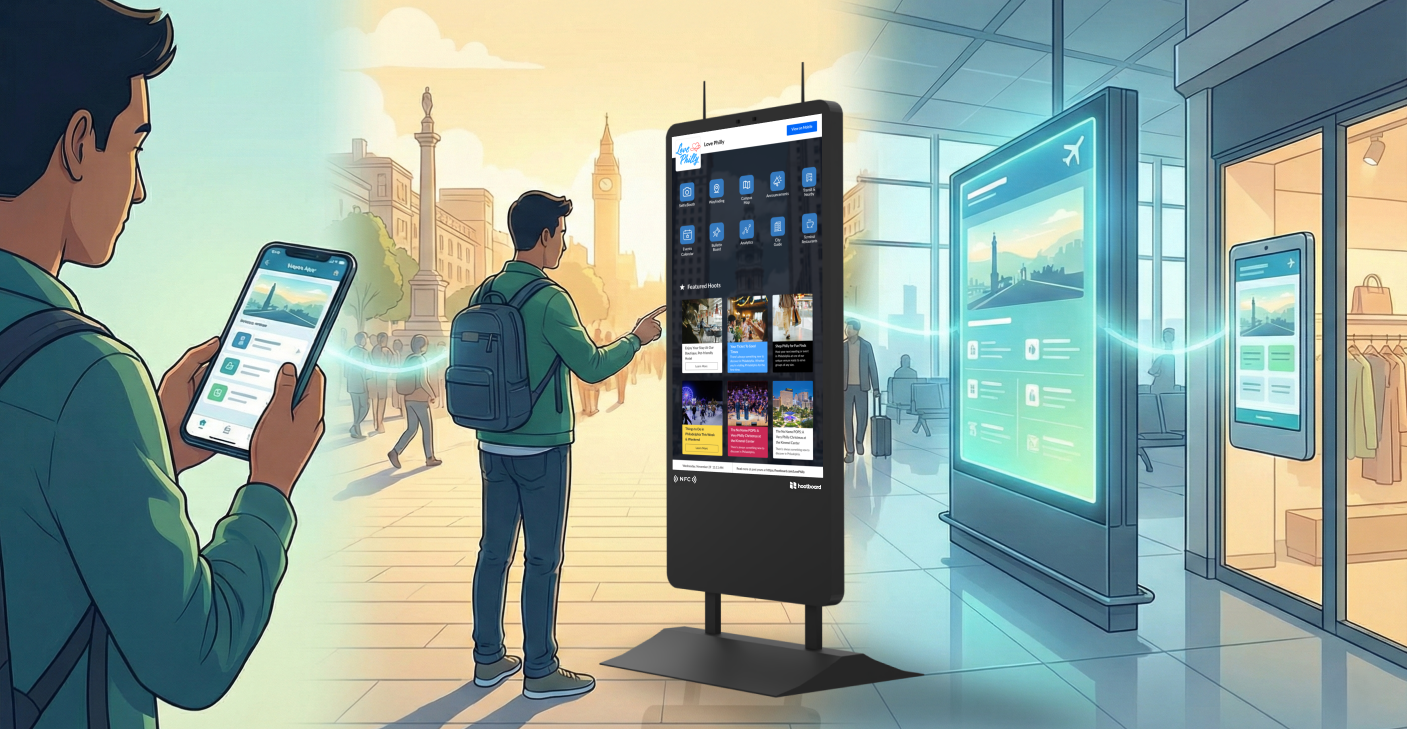
The travel and tourism sector has spent the last decade becoming digital-first. The next decade belongs to organizations that become interactive-first—meeting visitors in physical spaces with contextual, responsive, and engaging experiences.
For DMOs, airports, hospitality brands, retail destinations, and tourism hubs, interactive engagement is no longer a “nice-to-have.” It is a strategic necessity that directly impacts visitor satisfaction, dwell time, economic activity, and brand perception.
This article explores why engagement-first strategies matter, how interactive systems reshape visitor journeys, and how DMOs can lead the shift toward smarter, more connected destinations.
Why Digital-First Engagement Is No Longer Enough
Most DMOs already operate sophisticated digital ecosystems—websites, apps, email campaigns, and social platforms. While these channels are essential, they share a critical limitation: they assume visitors will seek out information on their own.
In reality, travelers increasingly expect information to find them—at the right moment, in the right place, and in the right format.
Digital-first strategies struggle because they:
- Compete for attention in crowded online environments
- Lack real-time context (location, intent, timing)
- Fail to engage visitors once they arrive on-site
An interactive-first approach fills this gap by embedding engagement directly into the physical journey.
Tourism Digital Signage Solutions page →
What Does “Interactive-First” Mean for DMOs?
Interactive-first engagement prioritizes two-way interaction over one-way communication. Instead of broadcasting static information, destinations respond dynamically to visitor behavior.
For DMOs, this means:
- Interactive kiosks instead of static visitor maps
- Context-aware content instead of generic listings
- Real-time insights instead of post-visit surveys
Interactive systems transform destinations from information providers into experience facilitators.
The Role of Interactive Kiosks in Modern Destination Engagement
From Visitor Information Centers to Always-On Engagement Hubs
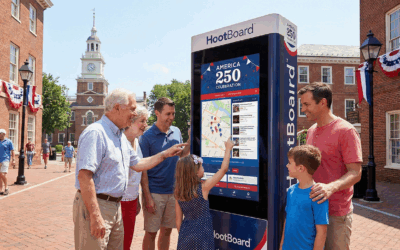
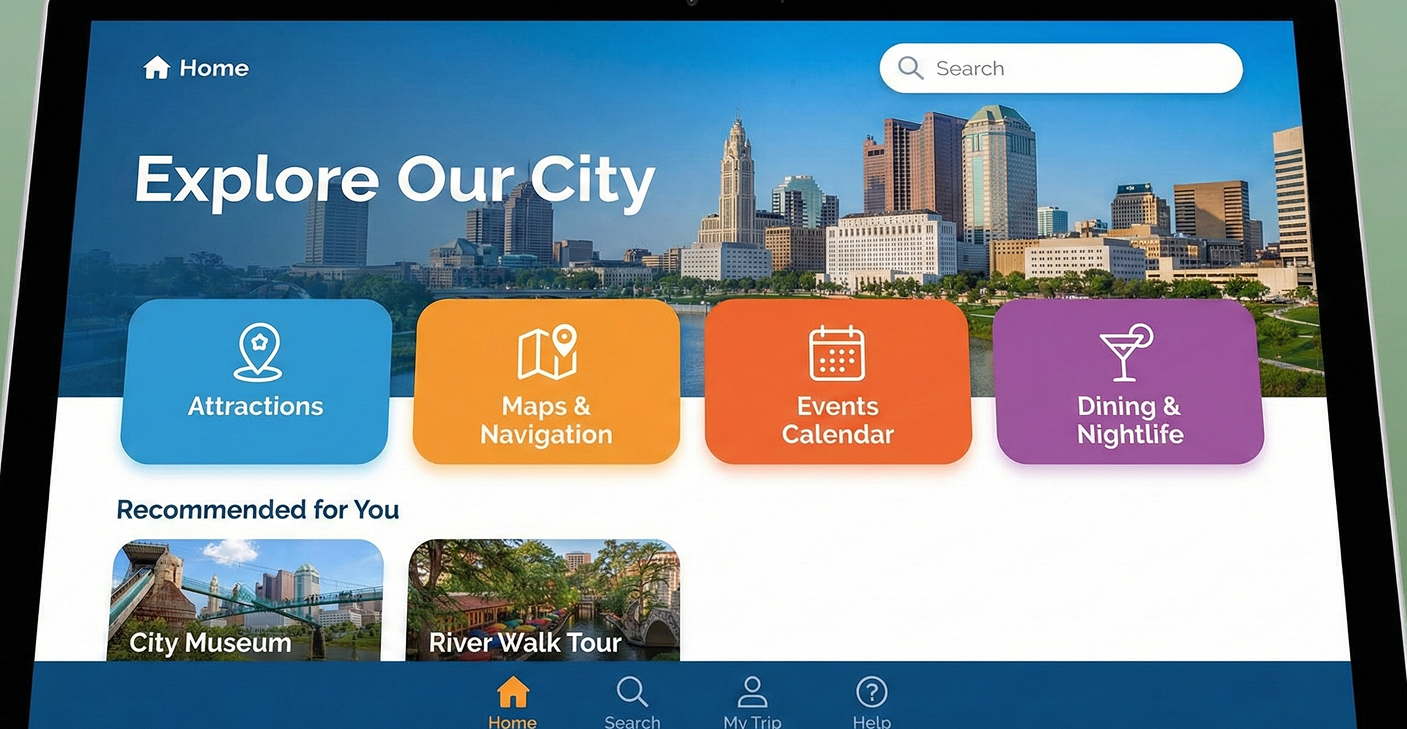
Traditional visitor centers rely on physical counters and limited operating hours. Interactive visitor engagement kiosks extend this function 24/7 across multiple locations.
These kiosks enable visitors to:
- Discover attractions, dining, and events
- Navigate unfamiliar areas with confidence
- Access multilingual and accessible content
- Receive personalized recommendations
For DMOs, kiosks scale engagement without scaling staff.
Visitor Engagement Kiosks for Tourism page →
Interactive Wayfinding as a Core Tourism Experience
Wayfinding is one of the most underestimated aspects of visitor experience. Confusion leads to frustration—and frustration shortens visits.
Interactive wayfinding kiosks help:
- Reduce visitor anxiety in unfamiliar destinations
- Increase foot traffic to key areas
- Highlight under-discovered attractions
For tourism districts and airports, wayfinding directly influences dwell time and spending.
Interactive Wayfinding Solutions page →
How Engagement-First Strategies Benefit Travel & Tourism Stakeholders
DMOs and Destination Authorities
Interactive engagement allows DMOs to:
- Control narrative and branding on-site
- Promote local businesses dynamically
- Gather real-world visitor insights
- Demonstrate ROI to public stakeholders
Instead of guessing what visitors want, DMOs observe real behavior.
Airports and Transit Hubs
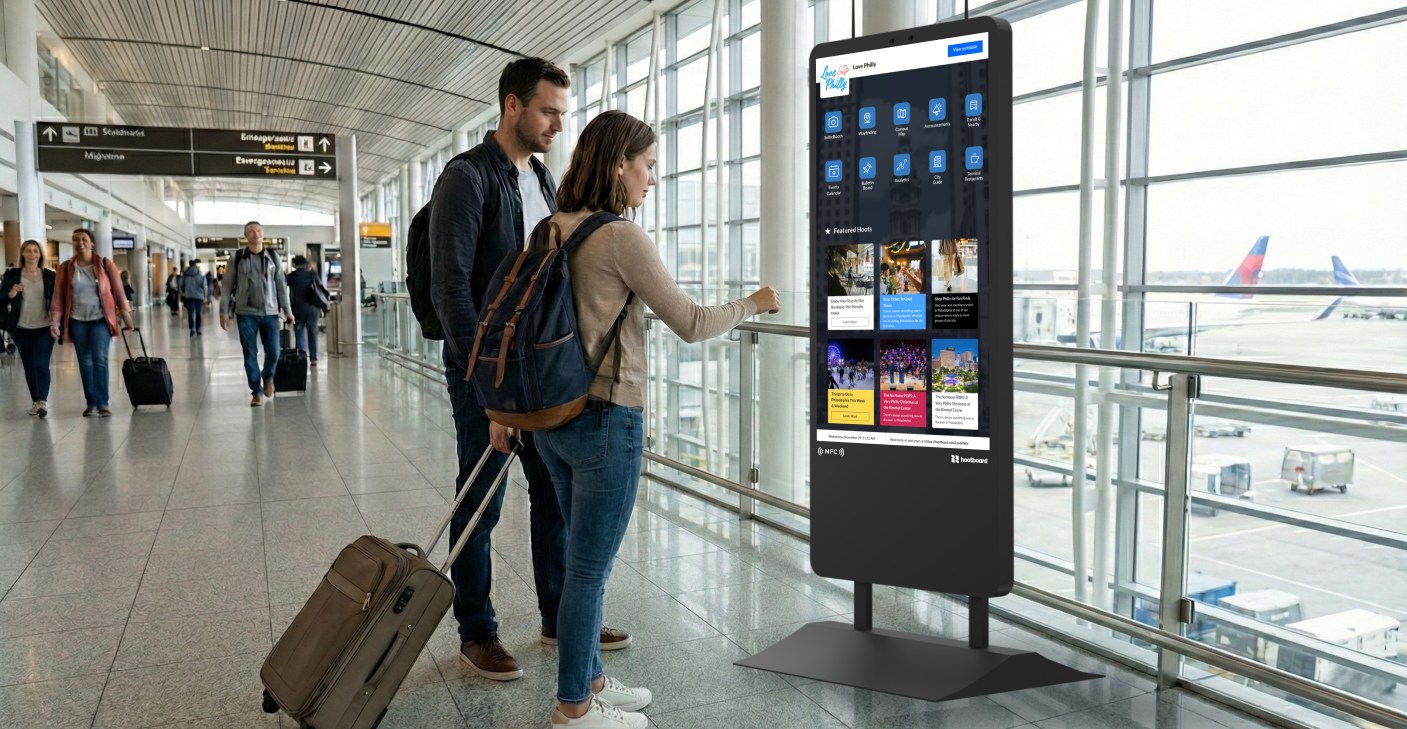
Airports are often the first and last impression of a destination. Interactive kiosks help travelers:
- Navigate terminals and ground transport
- Discover city experiences during layovers
- Reduce pressure on information desks
Engaged travelers are calmer travelers.
Hospitality, Retail, and Attractions
Hotels, retail districts, and attractions benefit from:
- Increased discoverability
- Higher conversion from browsing to visiting
- Contextual promotions tied to location and time
Interactive systems connect visitors to local economies more effectively than digital ads alone.
The Hidden Value of Engagement Data for DMOs
Beyond engagement, interactive systems generate valuable insights.
Understanding Visitor Intent in Real Time
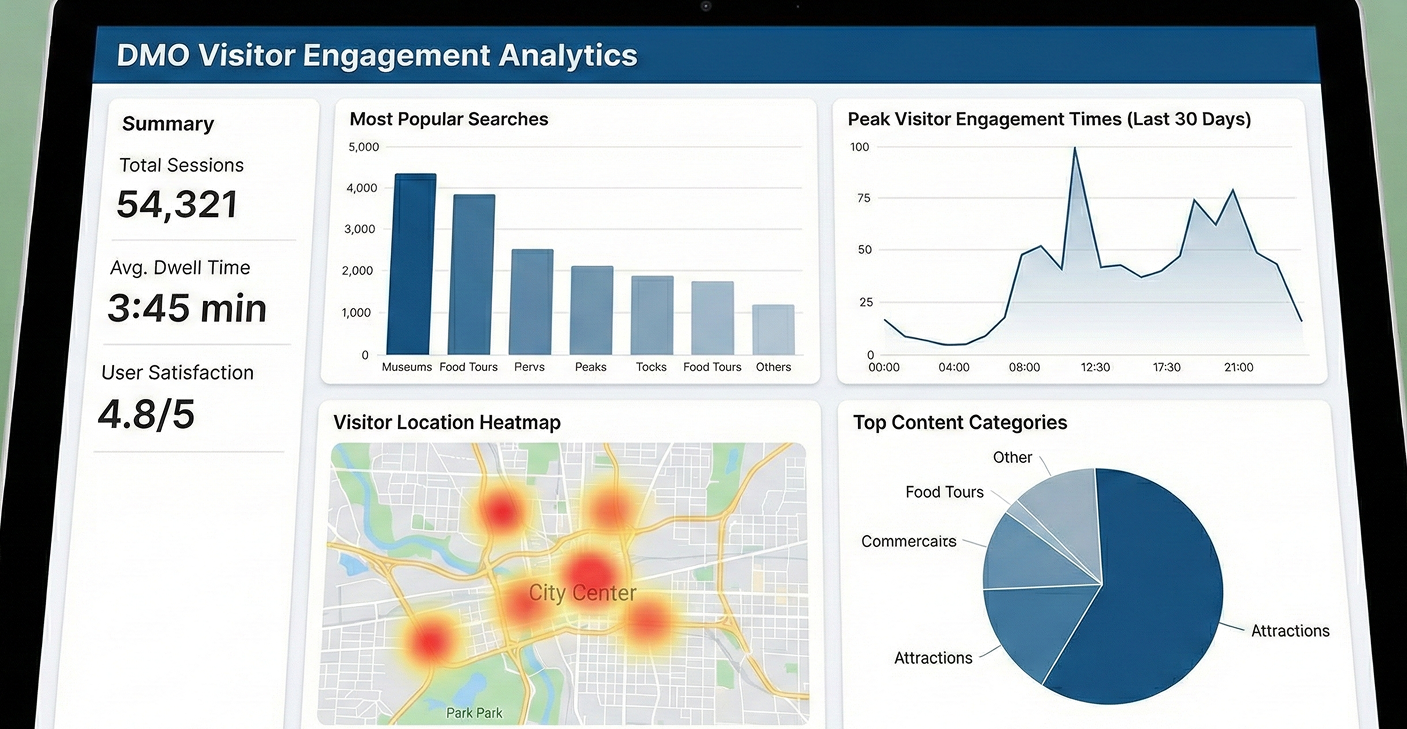
Kiosk and signage interactions reveal:
- Popular attractions and searches
- Peak visitor times and locations
- Content that drives action
- Seasonal and event-based trends
This data helps DMOs optimize campaigns, partnerships, and infrastructure.
Moving Beyond Surveys to Behavioral Insights
Surveys capture opinions. Interaction data captures reality.
Behavioral insights enable:
- Smarter marketing investments
- Better partner alignment
- Data-backed storytelling for funding and grants
Why Interactive-First Destinations Outperform Digital-Only Ones
Destinations that embrace interactive engagement see:
- Longer visitor dwell time
- Higher satisfaction scores
- Increased local spending
- Stronger destination branding
Interactive-first strategies create a feedback loop: engage, learn, optimize, repeat.
How Platforms Like HootBoard Enable Engagement-First Destinations
Platforms like HootBoard unify interactive kiosks, digital signage, and content management into a single engagement ecosystem.
For DMOs, this means:
- Consistent branding across touchpoints
- Centralized content and updates
- Built-in engagement analytics
- Scalable deployments across regions
Rather than managing fragmented tools, destinations operate a cohesive engagement strategy.
The Future of Travel and Tourism Is Interactive
Travelers no longer differentiate between digital and physical experiences—they expect both to work together seamlessly.
DMOs and tourism leaders who adopt an interactive-first mindset will:
- Build more memorable destinations
- Support local businesses more effectively
- Make smarter, data-driven decisions
In a competitive global tourism market, engagement is the differentiator—and interactivity is the engine that drives it.